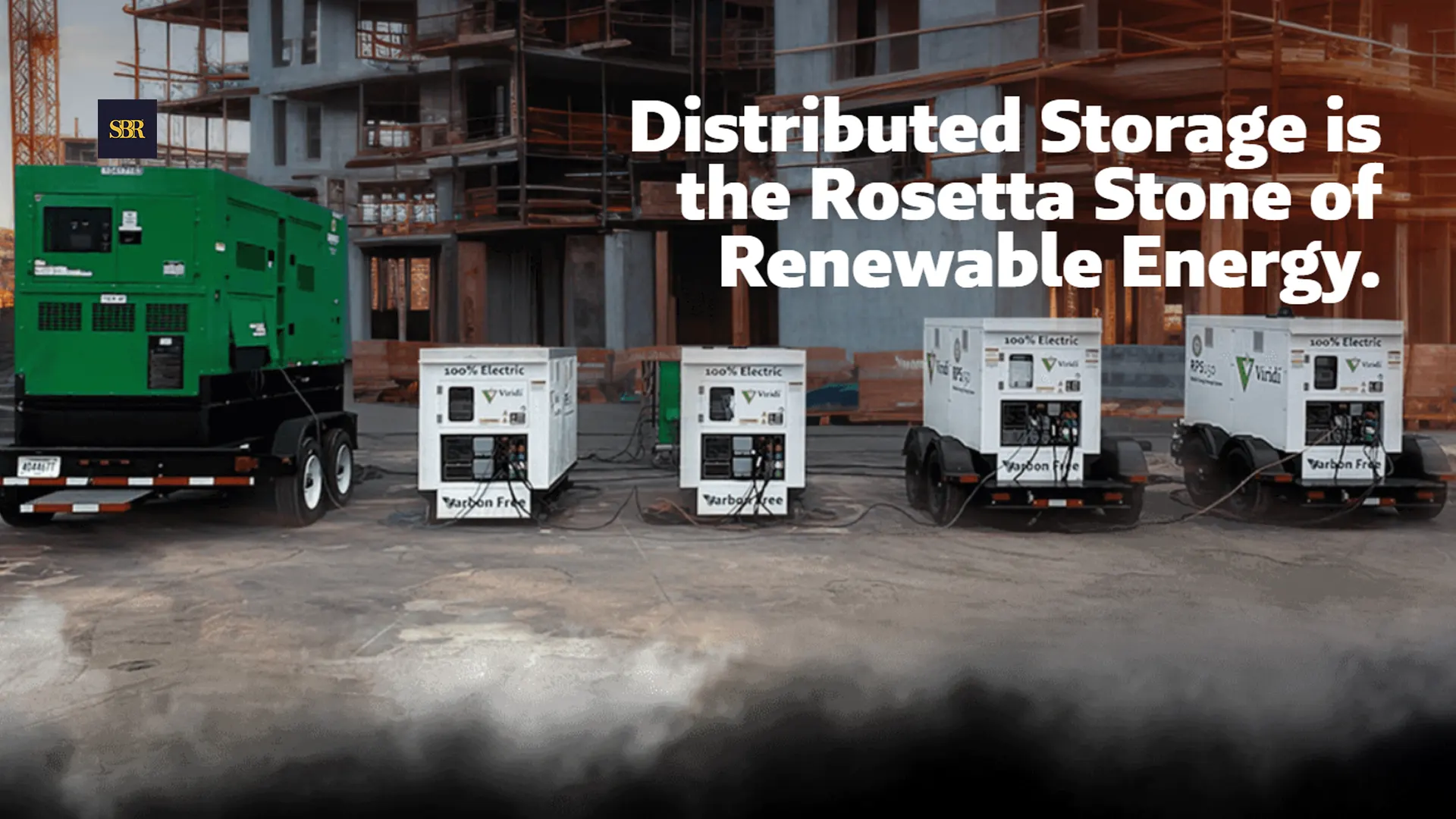
BUFFALO, N.Y., Oct. 26, 2026 — Peace Bridge Place, an affordable housing development in Buffalo, New York, has installed a 3.75-megawatt-hour battery to store excess electricity and supply it when demand is high. The battery can meet the development’s electricity needs for several days, reduce energy costs, and provide backup power during outages, according to U.S. News & World Report.
Battery manufacturer Viridi and developer Good Carbon Co. set up the project, one of the largest battery installations in a U.S. residential building. Fire risks and installation costs have limited the use of large batteries in multifamily housing. Utilities already pair battery storage with solar and wind farms, while homeowners use smaller batteries to store rooftop solar power and provide backup electricity.
Balancing Supply and Demand
Battery storage enables utilities and buildings to store electricity when supply exceeds demand and use it when consumption peaks. Batteries charge when solar panels and wind turbines produce surplus electricity and release stored power when generation falls short. Hydropower can also provide electricity for storage. New York ranks among the leading hydropower-producing states, and Buffalo lies near Niagara Falls, where most of the state's hydropower is generated.
During periods of high electricity demand, Peace Bridge Place can draw power from its battery instead of the grid. The utility will compensate the property for reducing its electricity consumption from the grid and for sending stored power back when needed. These payments can lower the property's electricity bills and benefit residents. The battery can also provide backup electricity during outages. The development uses an all-electric design, with geothermal energy for heating and cooling instead of natural gas.
The New York State Energy Research and Development Authority (NYSERDA) helped fund the project to bring clean energy to disadvantaged communities. “It goes a long way toward demonstrating the safety and viability of these types of projects,” said NYSERDA President and CEO Doreen Harris.

Battery Fire Safety Tests
Viridi spent six years and $10 million developing a battery enclosure designed to prevent a failing cell from igniting neighboring cells. Half of that expenditure went toward batteries the company destroyed during testing, CEO Jon M. Williams said. The design uses plates, pouches and spacing to isolate individual cells. Williams said the enclosure prevents gas, smoke, heat and flames from escaping if a cell fails. “We want our electric power to be resilient, affordable and available. Distributed battery storage accomplishes all three,” Viridi CEO Jon M. Williams said. “The only thing that has been holding up installations at scale is safety; a lot of the products on the market over the last 10 years have burned things down.”
During one safety test, Viridi deliberately forced a battery to fail while cheesecloth covered the enclosure. The test report recorded no charring or ignition of the cloth. In April, Viridi announced that its battery energy storage system had received a UL 9540 listing from TÜV Rheinland, allowing indoor installation without additional fire suppression specifically for the battery system.
Jigar Shah, who led the U.S. Department of Energy’s Loan Programs Office during the Biden administration, called the Peace Bridge Place project a milestone for battery safety. Shah said Viridi was the only company to consistently pass what he called a “near impossible” test. Large battery fires have prompted opposition to proposed storage facilities in some communities, although the Electric Power Research Institute has reported that battery failure rates have declined as installations have grown.
States Back Battery Storage
Officials in New York and California view battery storage as a way to improve electricity reliability, reduce pollution and control energy costs. California Energy Commission Chair David Hochschild said more than two-thirds of California's electricity comes from clean energy. Batteries store electricity for use when renewable sources produce less power. “I believe the battery industry is the single most important energy industry for the next several decades,” Hochschild said.
Hochschild co-founded the Electric Innovation Initiative to promote the use of electricity instead of fossil fuels across more sectors of the U.S. economy. California adds about 2,000 battery storage systems each week, he said. The world's largest battery storage project is also under construction in Fresno County.
In New York, Gov. Kathy Hochul has made grid reliability and electricity costs priorities. Harris said battery storage can help the state manage demand and use existing grid infrastructure more efficiently. “If we don’t need to build generation, we can utilize the grid that we have more effectively, that’s extremely valuable to us,” Harris said.

Photo credit: Good Carbon Co.
Battery Storage in Multifamily Housing
Viridi and Good Carbon Co. selected Peace Bridge Place because the all-electric development needed additional power capacity and reliable backup electricity. Local electricity demand can exceed available supply, and utility National Grid supported the project, Williams said. The development qualifies as affordable housing because its renters earn no more than 80% of the area's median income. Good Carbon Co. expects battery storage to play an important role in future multifamily housing developments.
Viridi has manufactured batteries in Buffalo since 2018 and operates another manufacturing facility in Richmond, California. A medical research building in Buffalo also uses the company's battery technology. Williams said the Buffalo plant could manufacture enough battery packs in one year to supply electricity to about 14,000 average U.S. homes for 24 hours.
Shah expects battery backup systems to become much more common in U.S. homes by 2030. He said strategically deployed batteries could meet more electricity demand without costly grid upgrades. The Peace Bridge Place project shows how a large battery can lower a residential property’s electricity bills, provide backup power during outages, and reduce purchases from the grid when demand peaks. “We’re just getting started,” Hochschild said.
We want our electric power to be resilient, affordable, and available. Distributed battery storage accomplishes all three.