By Steve Davis, Director Mining and Energy Development, EarthDaily
VANCOUVER, March 30, 2026 — The latest S&P Global report on World Exploration Trends 2026 highlights a critical disconnect. On the surface, market conditions are improving. Financing is increasing for junior and intermediate companies. Metal prices, especially gold, are strong, driving commodity specific exploration budget increases. Drilling activity has picked up significantly from multi year lows. Taken at face value, these signals indicate the global nonferrous mineral exploration market is improving.
But when you look beyond the headline, things get far more complex. A closer look shows the industry is making choices that will shape supply for the next decade. Those choices are not lining up with long-term demand.
Where Capital is Flowing and Where It is Not
The report makes one thing clear: capital is flowing again, but it’s not going into discovering net new deposits. After a few years of tight markets, funding for miners rebounded sharply in 2025 driven by higher metals prices and declining interest rates. That should have translated into more exploration, but it hasn’t. Global exploration budgets still declined by 0.6% YoY, marking a third consecutive year of contraction. The reason is straightforward: investors are following the path of least risk by backing projects that are expanding known resources and deposits.
The numbers show budgets for exploration at and near existing mines have increased 13% to a record high of $5.6 billion. Budgets for generative grassroots exploration have dropped 8% to $2.57 billion. The flow of capital clearly reflects global risk tolerance, with investors favoring probable near-term returns by focusing on commodities where prices are strong (gold, copper, silver and specialty commodities) and close to known orebodies. From an investment perspective, this makes sense in the current environment. It reduces risk and supports faster returns. But when combined with how the industry is structured and the roles majors, intermediates and juniors play in grassroots discovery, it comes with a trade-off.

Source: S&P Global Market Intelligence, World Exploration Trends 2026
Majors in 2025 only allocated 19% of their budgets to generative grassroots exploration, marking the 17th consecutive year of favoring existing deposit expansion over generative exploration. Similarly, juniors, who historically have driven global grassroot discovery, have also pulled back, spending an average of $400,000 in early-stage exploration in 2025 compared to their $1 million spending average at their height in 2012. There is variability across regions, jurisdictions, and commodity groups, but at a macro level, majors are not structurally set up to replace the role juniors play in the discovery cycle.
If juniors are not funded to take on the risk, fewer new deposits are discovered, and the pipeline of projects will shrink.
What Does This Mean for Future Supply?
Considering it takes well over a decade to move from first discovery to production, if early-stage work continues to drop off and the pipeline shrinks, the impact won’t show up immediately. It will show up ten to fifteen years from now as a lack of projects ready for development. By the time the impact is visible, it may be too late to respond, leaving a supply deficit that cannot be easily reversed.
Despite these headwinds, the industry cannot treat early-stage exploration as optional. So what can be done now to reinvigorate the early stages of exploration? If the industry is going to operate with tighter capital, shorter investment horizons, and overall risk aversion, then the cost and speed of decision-making become critical.
Making Early-Stage Exploration Viable Again
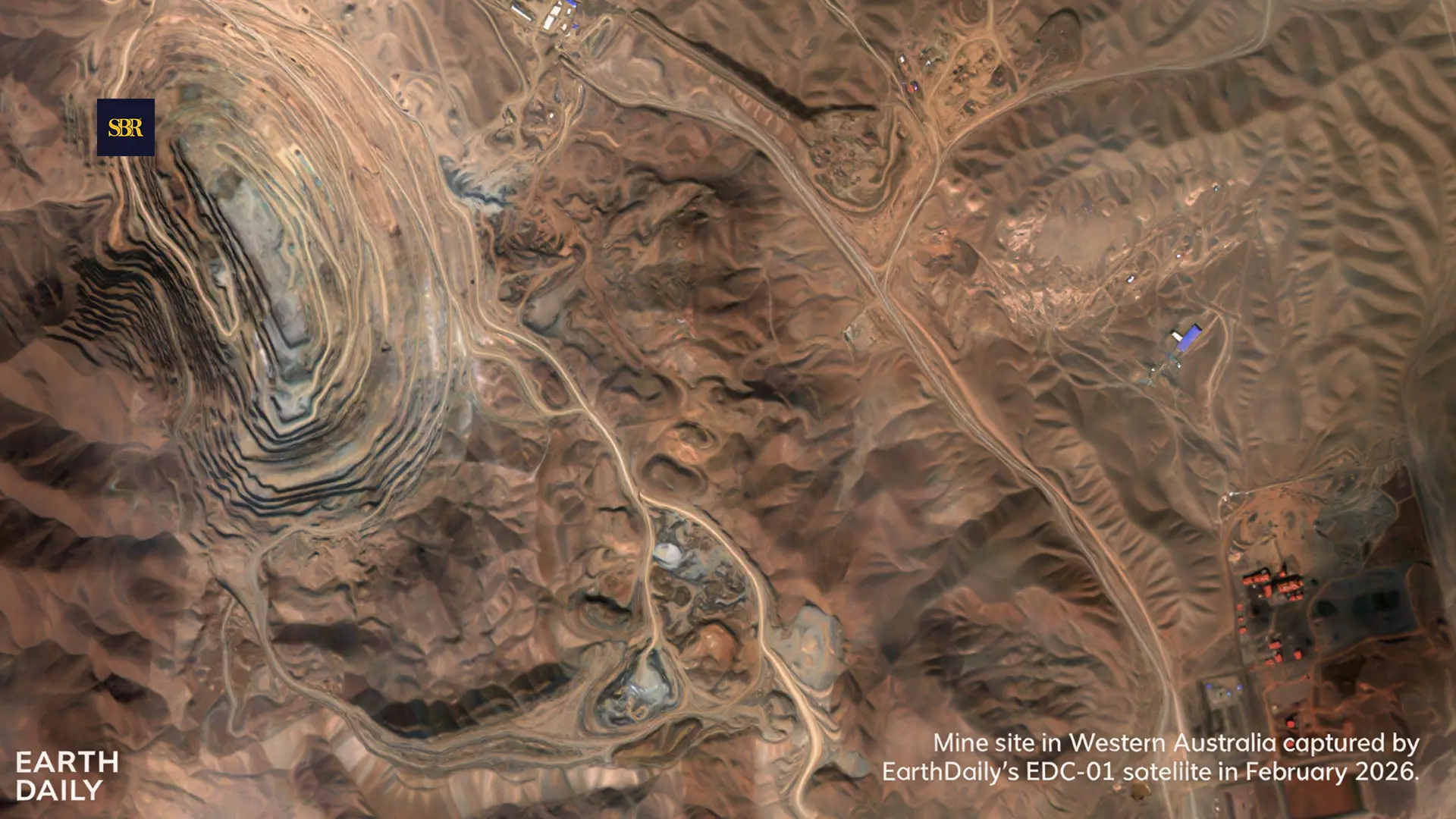
This is where cost-effective, scalable exploration technologies applied to early-stage projects, such as remote sensing, large-scale data integration, and predictive analytics (in addition to traditional geoscience data), can have significant impact.
These technologies don’t replace the need to put geologists in the field, but they fundamentally enhance it by narrowing the search space and prioritizing targets with greater precision.
At a practical level, this means screening large land packages early, identifying mineral signatures before ground campaigns begin, and integrating remote sensing with geochemical and geological datasets to build a more complete picture of prospectivity. Instead of broad, capital-intensive programs, companies can focus fieldwork on the most promising areas from the outset.

Taca Taca Cu-Au-Mo porphyry project, Argentina. Multispectral remote sensing highlights hydrothermal alteration patterns, with yellow zones indicating structurally controlled, high-intensity alteration associated with the porphyry system.
This shifts how early-stage exploration is evaluated. It reduces upfront uncertainty, shortens the time to actionable insights, and allows technical teams to demonstrate a higher level of confidence earlier in the project lifecycle. In an environment where capital is selective, that ability to show disciplined, data-backed targeting is becoming increasingly important.
A Structural Imbalance with Long-Term Consequences
This provides investors and budget holders with greater clarity on capital allocation early in the project lifecycle. In an environment where fewer dollars are being allocated to grassroots exploration, this becomes critical. Every dollar must work harder, and every decision must be justified early.
The trends outlined in the S&P Global report point to a structural imbalance in how exploration is being funded and executed. While current strategies favor lower-risk, near-term returns, they come with a longer-term consequence. If early-stage discovery continues to decline, the industry risks entering the next decade with a limited pipeline of new projects at a time when demand for critical minerals is only increasing.
Drilling activity has picked up significantly from multi year lows. Taken at face value, these signals indicate the global nonferrous mineral exploration market is improving.
About Steve Davis
Steve Davis is Director Mining and Energy Development at EarthDaily. He is a mining transformation and strategy expert, currently leading global market engagement for EarthDaily's mining technologies.