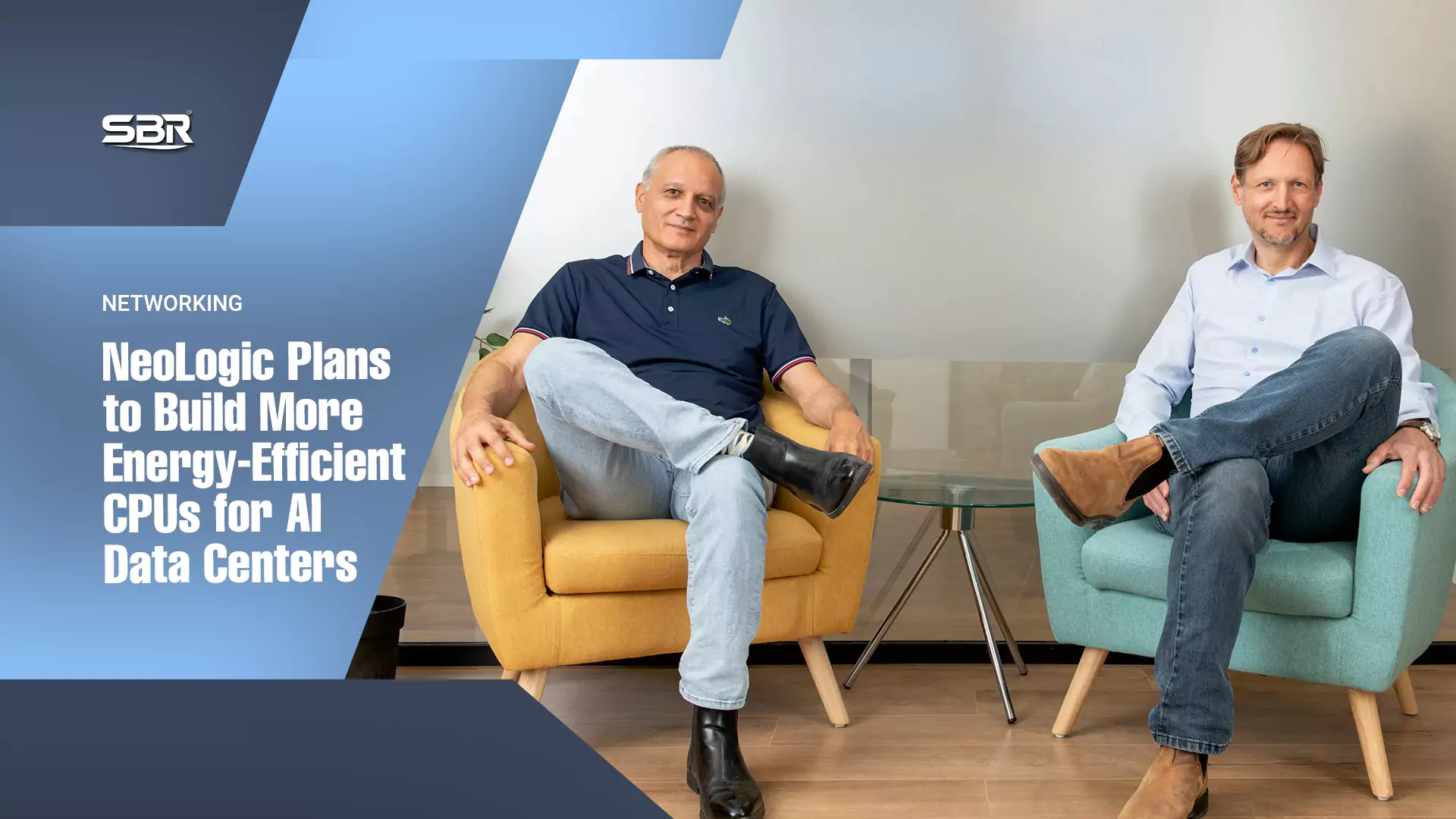
TEL AVIV, Aug. 12, 2025 — Semiconductor startup NeoLogic has secured $10 million in Series A funding to advance development of its server processors aimed at cutting the energy demands of AI data centers.
The round was led by KOMPAS VC, with participation from M Ventures, Maniv Mobility, and lool Ventures, bringing the company’s total funding to $18 million since its founding in 2021 by Chief Executive Officer Dr. Avi Messica and Chief Technology Officer Ziv Leshem.
When NeoLogic started building its energy-efficient CPUs for AI servers, industry peers suggested to founders Messica and Leshem that their idea lacked market viability.
“Majority of the people we came across were of the opinion that it is impossible,” Messica told TechCrunch. “Few of them told us that innovation is impossible because you cannot innovate in logic synthesis. You can’t innovate in circuit design. It’s too mature.”
Founded in 2021, the Israeli fabless semiconductor startup has been building a server CPU that uses simplified logic, how a chip processes information, with fewer transistors and logic gates to run faster while requiring less power.
How Important are Energy-Efficient Systems?
 The company’s proprietary CMOS+ technology is designed to reduce data center energy consumption by up to 30 percent compared to equivalent state-of-the-art processors. The approach simplifies the underlying logic of a microprocessor, reducing the number of logic gates and creating more power-efficient alternatives, while maintaining compatibility with existing CMOS manufacturing processes.
Messica and Leshem have 50 years of combined experience in the semiconductor industry. Leshem has decades of experience in chip design at companies like Intel and Synopsys, while Messica’s core area has been circuit design and manufacturing.
Building CPUs with fewer transistors, NeoLogic aims to boost performance and cut power use in AI data centers. Despite early hiccups, the team has remained committed to making chips that are both powerful and energy-friendly. Their objective is to roll out a single-core test chip by the end of the year and have CPUs running in data centers by 2027.
“We co-founded this company more than four years ago because Moore’s Law was dead,” Messica said, referring to the 1960s observation that the number of transistors on microchips doubles every two years.
Breaking Limits, Building Ties
Fighting Industry Odds: Almost a decade ago, Messica had expressed concern that companies had stopped scaling transistors down in size, as their dimensions had reached a point where there was little progress to be made.
However, Messica said NeoLogic was more optimistic regarding scaling up. The startup is associated with two hyperscaler partners on the design of the server CPUs, but Messica has been tight-lipped regarding their names.
Funding and Partnerships for Chip Development: The $10 million Series A funding will help NeoLogic develop its engineering team and refine chip designs. It is also collaborating with two major tech giants to ensure its CPUs are ready to help data centers save energy and money as soon as they launch.
First Product in Pipeline
NeoLogic is exhibiting its first product to select customers and plans to launch it commercially as early as 2026. The company plans to expand its engineering, sales, and marketing teams as it seeks partnerships with major cloud providers.
AI-driven computing is increasing the strain on global data center infrastructure, with inference workloads forcing operators to accommodate as much as five to ten times more power-hungry servers, pushing capital and operating expenses upward and adding to carbon emissions.
The AI data center processor market is projected to reach $151 billion by 2029, spurring demand for designs that can deliver greater performance within tighter energy constraints.
The company’s proprietary CMOS+ technology is designed to reduce data center energy consumption by up to 30 percent compared to equivalent state-of-the-art processors.
Inputs from Saqib Malik
Editing by David Ryder






.webp)