
Velontra is an aerospace company based in Cincinnati, Ohio, developing propulsion systems for subsonic, supersonic, and hypersonic aircraft. The company develops low-cost turbojet engines for unmanned aircraft, afterburning systems for supersonic flight and air-breathing propulsion for hypersonic vehicles. These technologies target aircraft and military applications that require specific speed and thrust capabilities without the cost and development time associated with designing an entirely new engine. Velontra’s work includes modifying existing commercial engines and researching new propulsion configurations.
A turbojet draws in air, compresses it, mixes it with fuel, and burns the mixture to produce hot gas. The gas drives a turbine, while the exhaust generates thrust. An afterburner injects additional fuel into the exhaust stream and burns it to increase thrust, particularly during acceleration and high-speed flight. The added thrust can help an aircraft reach supersonic speeds, but it also increases fuel consumption and thermal loads. Engine developers must therefore evaluate thrust, weight, fuel use, operating temperatures, durability, and manufacturing costs when adapting propulsion systems for new aircraft.
Supersonic Engines
Velontra has developed the Bronco Mk 1, a supersonic engine derived from the commercially available PBS TJ150 turbojet. Modifying an existing engine can shorten the initial development process, although the revised system still requires testing to establish its performance and reliability. A U.S. Air Force Small Business Technology Transfer award worth approximately $1.8 million funded direct-connect altitude testing of a small afterburning gas turbine for future Collaborative Combat Aircraft and supersonic munitions. The project ran from October 2024 through July 2026 and included plans for testing flight-representative subsystems and conducting static-fire tests under simulated altitude conditions.
The research addresses propulsion for unmanned aircraft and munitions that require greater speed, range or payload capacity than small subsonic engines can provide. An afterburning turbojet can generate additional thrust without requiring a substantially larger base engine, but the resulting fuel consumption and heat loads affect aircraft design and operating range. The federal award identifies the work as technology maturation, not an operational deployment. The end of the contract period does not establish that the engine has completed flight testing, entered military service, or been selected for a production aircraft.
Hypersonic Research
Velontra is also developing air-breathing propulsion technology for hypersonic flight, generally defined as speeds of Mach 5 or higher. Its HyperLaunch concept calls for a jet-powered first stage to take off horizontally, climb to high altitude, and accelerate to approximately Mach 5 before releasing a rocket-powered second stage to carry a payload into low Earth orbit. The first stage would use oxygen from the atmosphere during powered flight, reducing the amount of oxidizer it must carry for that portion of the journey. The concept offers a proposed alternative for reaching orbit, but public information does not establish a completed flight demonstration or an operational launch capability.
The proposed system would need to operate across a wide range of speeds and altitudes while managing aerodynamic heating, structural loads and flight control. The transition from jet propulsion to rocket propulsion would also require reliable separation and ignition of the second stage. Horizontal takeoff could eliminate the need for a conventional vertical launch vehicle, but the system’s economics would depend on development costs, payload capacity, turnaround time and reliability. Independent performance data are needed to compare its projected fuel efficiency with conventional rockets on equivalent missions.
Contracts and Testing
Federal awards document Velontra’s work beyond the Bronco Mk 1 program. In June 2026, the U.S. Air Force Research Laboratory awarded the company approximately $110,000 for a Phase I feasibility study of a very small turbojet afterburner. The contract ran from June through September 2026. A separate Air Force-funded study, awarded in 2025 for approximately $109,568, examined the potential transfer and commercialization of the Responsive Open-Source Engine, a small turbine engine developed through Air Force research. The study assessed materials, manufacturing processes and cost drivers, including the possibility of adapting the engine for defense and commercial applications.
Velontra has also conducted work on additively manufactured ramjet hardware and engine demonstrations with research partners, including Purdue University. Additive manufacturing can produce intricate metal components with fewer fabrication steps than some conventional methods, making it useful for prototype hardware and design testing. Velontra’s programs span small turbojets, afterburners and ramjet technology, but public information does not provide a complete account of its contracts, commercial revenue or delivery schedules. Further milestones include test results establishing engine performance across the required speed and altitude ranges, along with manufacturing costs at production volumes. Those results will help determine whether the propulsion systems can progress from research and prototypes to operational use in aircraft and space-access programs.
ABOUT | JOEL DARIN
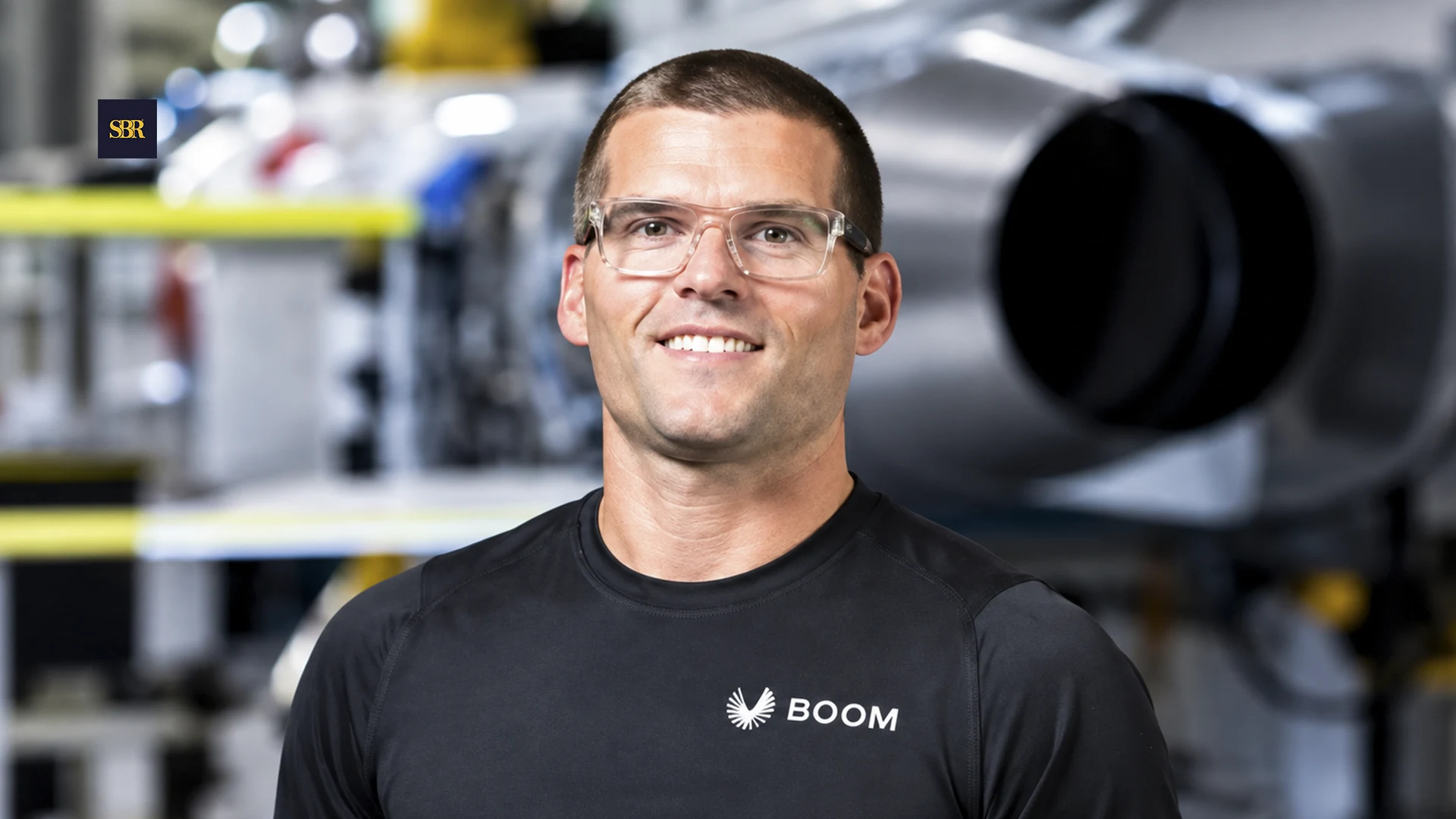
Joel Darin is the founder and CEO of Velontra, an aerospace company developing propulsion systems for supersonic and hypersonic aircraft. He previously worked at Hermeus as its first employee, designing, building, and testing a turbine-based combined-cycle propulsion demonstrator capable of operating up to Mach 4+. Before joining Hermeus, Darin worked in afterburner design at GE Aviation and conducted research in computational fluid dynamics and reacting-flow simulations at the Georgia Institute of Technology. He holds a master’s degree in combustion from Georgia Tech and a bachelor’s degree in mechanical engineering from Michigan State University.











.webp)