Electric vehicles depend on power electronics to control the flow of energy between the battery and motor. The motor controller, often referred to as an inverter, converts the battery’s DC electricity into controlled three-phase AC power for the motor while managing current, voltage, torque, regeneration and thermal performance. As electric platforms move toward higher voltage architectures and greater power output, the size, weight and efficiency of this hardware can influence the design of the entire vehicle.
Power density has become particularly important as engineers seek more output from smaller packages. A controller that can handle substantial electrical power within a compact enclosure can reduce the space allocated to power electronics and potentially lower the mass of the overall drivetrain. Efficiency also matters, since electrical losses become heat that must be managed through the vehicle’s thermal system.
Steinmetz is a San Francisco-based electric vehicle platform company focused on this part of the drivetrain. The company engineers high-voltage motor controllers and traction inverters using power electronics techniques intended to increase power density while keeping costs competitive. Its products target electric vehicles as well as robotics, aerospace, marine propulsion, and industrial electrification.
High-Voltage Motor Control
Steinmetz’s 0-Series is designed for 800V-class and 1000V electric systems, with three controllers covering different power requirements. The range starts with the MC0-10, a compact 1000V motor controller rated at 15 kW and 15 ARMS. The unit weighs 1.2 kilograms, occupies 0.75 liters, and can use either air or liquid cooling.
The MC0-250 moves to 250 kW at 1000 VDC and 250 ARMS. The liquid-cooled controller weighs 3.5 kilograms and has a 2.4-liter volume. It is intended for passenger EVs, robotics, aerospace, marine and industrial vehicle applications. The MC0-500 extends the range to 500 kW at 1000 VDC and 500 ARMS, with a mass of 7.4 kilograms and a volume of 4.8 liters. The MC0-500 is available now, while the MC0-250 is scheduled to ship in Q3 2026 and the MC0-10 is scheduled for Q4 2026.
All three controllers are rated above 99% nominal efficiency and can operate at switching frequencies reaching 100 kHz. The MC0-500 also carries an IP67 rating and uses liquid cooling, with CAN/J1939 and Automotive Ethernet interfaces available for system integration.
More Power in Less Space
Steinmetz centers its product engineering on power density. The company says its proprietary designs can achieve up to 2.3 times the power density of traditional competing products, allowing more electrical output within a smaller physical package. Its current product information lists the MC0-250 at 104 kW/L, while the MC0-500 datasheet lists 100 kW/L.
The engineering challenge extends beyond fitting more power into a smaller enclosure. High-voltage motor controllers must manage electrical switching, current regulation, thermal loads, electromagnetic interference, motor position and fault behavior while communicating with the wider vehicle system. Steinmetz works across electrical, mechanical, semiconductor, firmware and controls engineering to address these requirements within the controller itself.
Steinmetz’s controllers are designed for applications where power, mass and packaging requirements limit conventional controller designs. The MC0-500, for example, is rated for 500 kW in a 4.8-liter package weighing 7.4 kilograms. The MC0-500 is designed for heavy EVs, buses, marine propulsion, eVTOL aircraft, and construction equipment.
From Electric Vehicles to Industrial Systems
Steinmetz’s product range extends beyond passenger vehicles. The MC0-250 is designed for electric vehicles, mobile robotics, aerospace, marine and industrial EV programs, while the MC0-500 targets larger electric platforms and high-power machinery. The MC0-10 addresses lower-power EV systems, robotics and test stands.
The controllers also include features intended for integration into different electrical and mechanical architectures. Depending on the product, cooling can be air or liquid, while communication interfaces include CAN and, on the MC0-500, CAN/J1939 and Automotive Ethernet. Steinmetz also maintains technical documentation covering hardware, cooling, connectors, mechanical integration, CAN protocols, EEPROM configuration and controller state-machine functions.
This range gives vehicle and machinery engineers options across different power levels without changing the underlying focus on high-voltage operation and compact power conversion. The company is also extending its technology toward applications beyond road transportation, including marine propulsion, aerospace, industrial machinery and robotics.
ABOUT | OWEN BRAKE
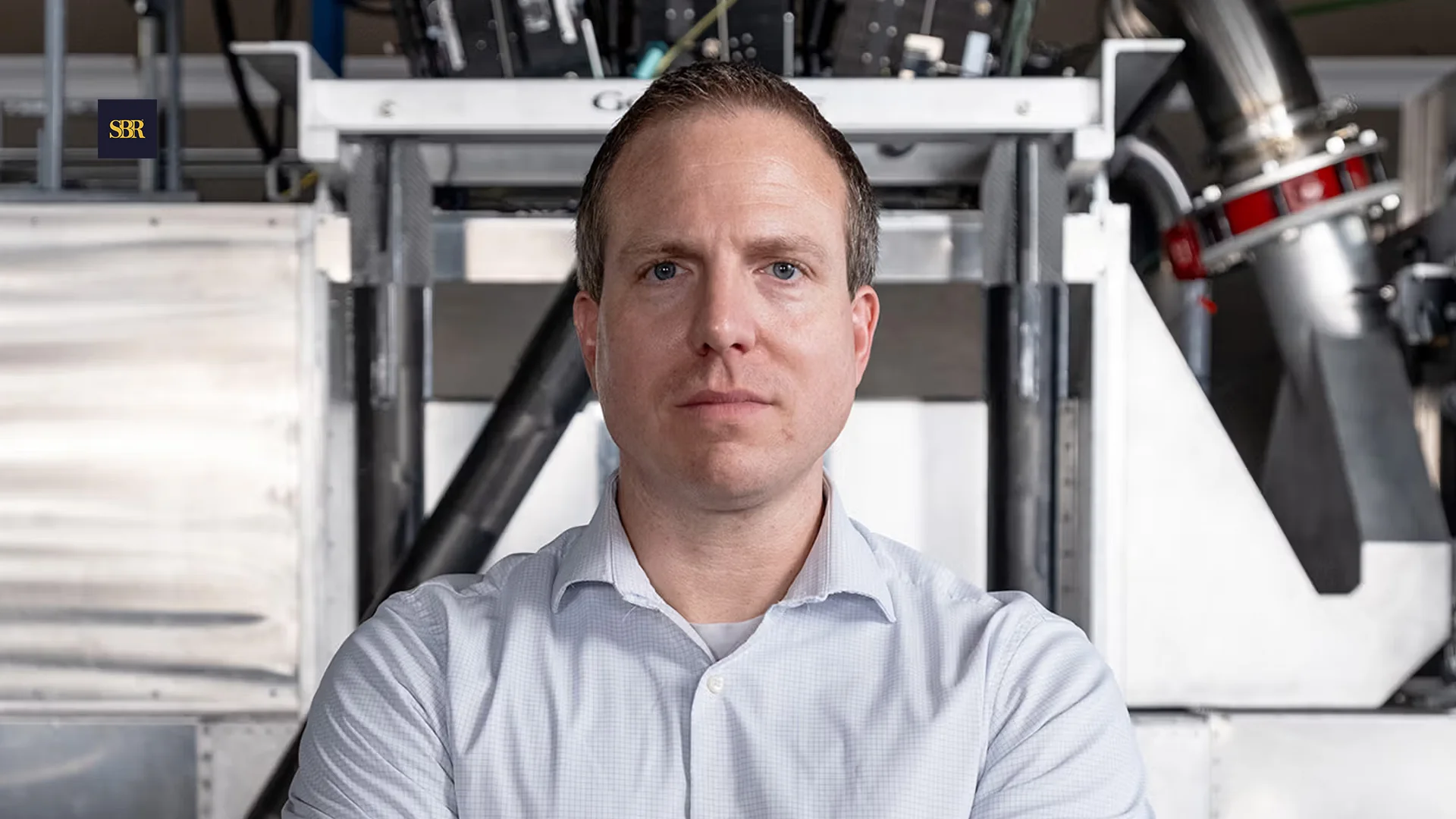
Owen Brake, co-founder, is the CEO of Steinmetz, a San Francisco-based power electronics company focused on high-voltage motor controllers and traction inverters. He is a multidisciplinary engineer with experience across automotive systems, power electronics, hardware and software engineering. Before Steinmetz, Brake worked in engineering roles at Tesla, Neuralink, Apple, Parallel Systems and Ford, including work on motor controllers at Tesla.
Brake earned a degree in Mechatronics Engineering from the University of Waterloo, where he was involved with Formula Electric and worked on electric vehicle performance. He met Steinmetz co-founder Ethan Childerhose during an internship at Neuralink, and the pair later worked together on the first Steinmetz inverter. Steinmetz was founded in 2024 and joined Y Combinator’s Winter 2025 batch.