NEW YORK, July 10, 2025 — Prior to the advent of e-commerce, logistics and transportation sector was a conservative domain, where on-time performance was not among the top priorities.
The evolution of e-tailers has set in new trends in this sector.
Promise of retailers for a same-day delivery, has proved to be a game changer in the last-delivery market.
Trade data reveals that same-day shipping has jacked up operating costs for retailers, squeezing their profits.
Last year, AlixPartners conducted a survey, which said that roughly three-quarters (76 percent) of retail executives admitted that delivery cost on a per-package basis has increased since 2023, and three out of four said home delivery does not add to profitability.
An overwhelming majority (85 percent) said reducing their total cost per order is top priority for last-mile delivery.
To cut down delivery costs, retailers said they were using a mix of last-mile delivery options, instead of opting for single carriers in last-mile delivery.
Carriers are increasingly offering competitive pricing to attract customers, leading to lower revenue. Carrier revenue per parcel ticked down to $9.09 in 2024 down from $9.10 in 2023, according to Pitney Bowes.
Sustainable Options
Last-mile drone delivery has been a promising option but regulatory clearances and its sustainable use remain a key concern.
Increasing use of electric vehicles (EVs) for last-mile delivery has also witnessed a grand success globally.
As per a Business Market Insights (BMI) survey, last-mile delivery makes up almost 30 per cent of supply chain emissions.
The sector is more reliant on eco-friendly solutions to reduce environmental impact.
Companies are adopting EVs, optimizing routes via AI to cut fuel use, and deploying micro-fulfilment hubs in urban centres to shorten delivery distances, according to the survey.
The eco-friendly plunge is also seen in the warehouses, which are now using renewable energy, reusable packaging, and crowdsourced delivery models to minimize carbon footprints.
Consumers are more oriented towards green logistics, which has created the need for partnerships with sustainability-focused carriers and carbon-neutral logistics options.
These strategies not only lower emissions by up to 40 percent but also significantly reduce operational costs and enhance brand loyalty, positioning sustainable last-mile logistics as a competitive necessity.
Market Growth
 As per the latest market research by Business Market Insights (BMI), the research report “Last Mile Delivery Market Size and Forecast (2021–2031)” forecasts how the market is set to surge 80 percent by 2031 as Technology Reshapes Global Delivery Ecosystems. The report spotlights AI’s pivotal role in revolutionizing the global last-mile logistics landscape.
Last year, revenue growth for US parcel shipping lagged volumes, largely led by an influx of new last-mile delivery companies. This put downward pressure on prices in a market that is expected to grow 36 percent by 2030, according to an annual industry report from Pitney Bowes.
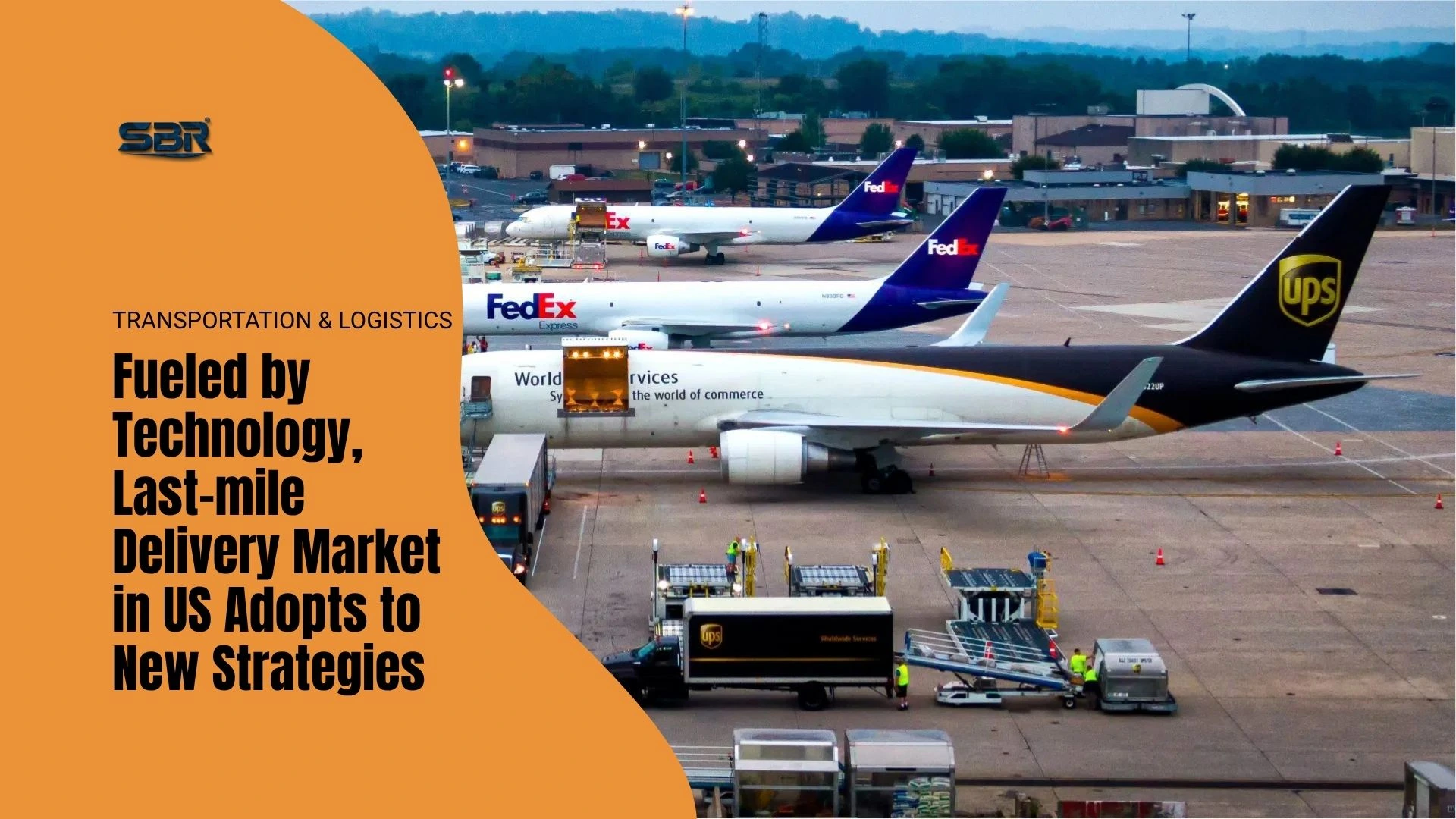
The dominance in market share, held by legacy carriers FedEx, UPS and the US Postal Service, for a long time has seen a shift.
Smaller carriers are increasingly taking market, while Amazon has emerged as a major challenge for legacy carriers.
The retailer’s logistics operation handled 6.3 billion parcels in 2024, up 7.3 percent year over year, and is expected to overtake the Postal Service by 2028, Pitney Bowes said in its recent Parcel Shipping Index.
The provider of mail and parcel shipping services, technology, and equipment said U.S. parcel volume increased 3.4 percent to 22.4 billion shipments last year and is projected to grow five percent annually, reaching 30.5 billion shipments by 2030.
Revenue, however, grew 2.7 percent last year to $203.2 billion.
Notably, independent couriers gaining market traction in recent years include OnTrac, Better Trucks, Jitsu, Veho, SpeedX, Speedy Delivery and UniUni.
Either startups or offering just regional service, these players have a lower overhead than national carriers. The US Postal Service’s new lost-cost shipping option, Ground Advantage, has also contributed to the pricing pressure.
To cut down delivery costs, retailers said they were using a mix of last-mile delivery options, instead of opting for single carriers in last-mile delivery.
Inputs from Saqib Malik
Editing by David Ryder