For decades, space activity focused on exploration, communication, and observation. Satellites mapped the planet, rockets carried payloads, and missions expanded scientific knowledge. Yet one idea remained largely theoretical: using space as a site for industrial production. Varda Space Industries is working to turn that idea into a functioning system.
Founded in 2021, the company develops spacecraft designed to manufacture materials in orbit and return them safely to Earth. The concept builds on a simple premise. Conditions in space differ from those on Earth, and those differences allow certain processes to produce results that cannot be replicated under gravity.
Low Earth orbit offers a microgravity environment where physical forces behave differently. In this setting, materials can form in ways that are difficult or impossible to achieve on the ground. Varda’s work focuses on capturing this advantage and turning it into a repeatable industrial process.
The company describes its mission in broad terms, framing its work as an effort to expand the economic bounds of human activity. This vision extends beyond a single product category. It points toward a future where manufacturing in orbit becomes part of the global economy rather than an isolated experiment.
Manufacturing in Microgravity
Microgravity changes how materials behave during production. Without the constant pull of gravity, particles settle differently, fluids mix in new ways, and crystals can form with greater uniformity.
This has direct relevance for pharmaceuticals. Many drugs depend on precise crystal structures, and those structures influence how a medicine performs. In orbit, these structures can develop under conditions that are difficult to reproduce on Earth, offering new possibilities for drug formulation.
Varda designs spacecraft that act as autonomous factories. These systems carry the equipment needed to process materials while orbiting the planet. Once production is complete, the results are placed in a reentry capsule and returned to Earth.
The platform integrates three main elements. A satellite bus provides power and stability in orbit. A manufacturing module handles production. A reentry capsule protects the material as it passes through the atmosphere and lands back on Earth.
This end-to-end system allows Varda to manage the full lifecycle of production, from launch to return. It also reduces reliance on external infrastructure, enabling more frequent and predictable missions.
Reentry Systems and Orbital Logistics
Manufacturing in space is only part of the equation. The ability to return materials safely to Earth is equally important. Varda has developed reentry systems designed to deliver products intact and ready for use.
The company’s W-Series capsules are built for this purpose. These vehicles protect their contents during the intense heat of atmospheric reentry and land with precision after completing their mission.
This capability introduces a new layer to space logistics. Instead of treating orbit as a one-way destination, Varda’s system creates a loop where materials travel to space, undergo processing, and return to Earth. This loop forms the basis of a functioning supply chain that extends beyond the planet.
Reusable rockets have already reduced the cost of reaching orbit. Varda builds on this progress by focusing on what happens after launch. The company’s work reflects a broader change in how space is used, moving from access to utilization.
As reentry becomes more reliable and routine, the connection between space and Earth-based industries strengthens. Materials produced in orbit can move into existing supply chains, linking space-based production with terrestrial manufacturing and distribution.
From Space Factories to Real-World Applications
The value of orbital manufacturing lies in its applications. Varda’s initial focus is on pharmaceuticals, where microgravity can enable new forms of drug development. Certain compounds crystallize differently in space, which may lead to improved formulations or new therapeutic possibilities.
Early missions have shown that drug materials can be processed in orbit and returned successfully. This establishes a proof point for the concept and opens the door to broader use cases. Research continues into how these materials can be integrated into existing pharmaceutical pipelines.
Beyond pharmaceuticals, the company points to other materials that may benefit from space-based production. Fiber optics, semiconductors, and advanced materials are all areas where microgravity can influence performance characteristics.
The range of potential applications suggests that orbital manufacturing can support multiple industries. Each application builds on the same underlying capability: producing materials under conditions that cannot be recreated on Earth.
This creates a new category of production rather than a variation of existing methods. Instead of refining terrestrial processes, Varda’s model introduces a separate environment where different physical rules apply.
A New Industrial Layer Beyond the Atmosphere
Varda’s development reflects a broader change in how space is viewed. It is no longer limited to exploration or observation. It is becoming a site of economic activity, where production, logistics, and supply chains extend beyond Earth.
The company’s infrastructure, from manufacturing modules to reentry capsules, forms the foundation of this system. Each mission contributes to a growing base of operational knowledge, making future flights more predictable and scalable.
Facilities on the ground support this effort. Varda operates from locations in California and Washington, D.C., where spacecraft are built, tested, and prepared for launch. These sites connect orbital activity with terrestrial operations, ensuring that each stage of production remains coordinated.
Leadership within the company draws from aerospace, technology, and pharmaceutical sectors, reflecting the interdisciplinary nature of the work. This supports the development of systems that operate across both space and Earth-based industries.
The idea of manufacturing beyond the atmosphere once belonged to long-term speculation. Varda’s work brings that idea into present-day execution. By building systems that operate in orbit and return usable products, the company establishes a framework for sustained industrial activity in space.
As this model develops, it introduces a new dimension to global production. Materials no longer need to be made solely on Earth. They can originate in orbit, shaped by conditions that offer capabilities unavailable on the ground.
This expansion of production into space does not replace existing systems. Instead, it adds another layer, one that works alongside terrestrial manufacturing. Together, these layers form a broader industrial structure, extending from Earth’s surface into low Earth orbit.
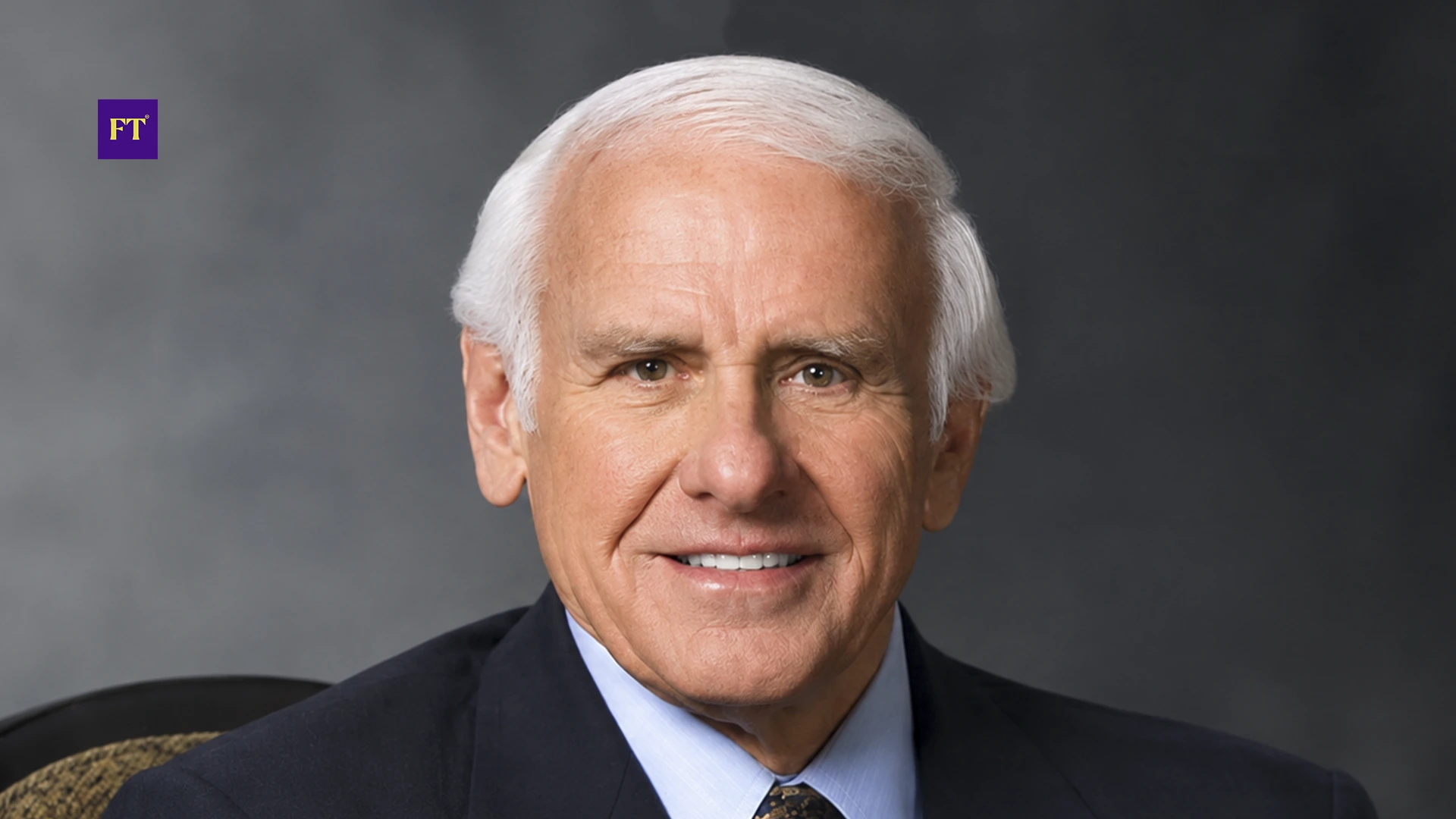
Will Bruey, Co-Founder & CEO, Varda Space Industries