BERKELEY, Calif., Sept. 5, 2026 — XDOF, a startup that collects real-world teleoperation data for training general-purpose robots, is nearing $50 million in annualized revenue less than three months after emerging from stealth.
The company’s rapid growth has also drawn interest from venture capital firms. XDOF is in talks for a Series B at a valuation of about $1.2 billion, with 8VC set to lead the round, according to several people with knowledge of the deal. The financing terms are not final, and the amount being raised has not been disclosed.
XDOF Tackles a Data Shortage in Robotics
XDOF collects data from physical-world activities to train robots. Unlike large language systems, which were initially trained on vast amounts of internet data, physical robots do not have an equivalent dataset for learning from real-world activity.
XDOF previously told TechCrunch it was working with 20 customers, including several frontier AI labs. Revenue has grown as demand for real-world robot training data has grown, prompting venture capital firms to approach XDOF about another financing round only months after its $70 million Series A.

GELLO Started the Research
XDOF was co-founded in 2024 by UC Berkeley researchers Philipp Wu, CEO, and Fred Shentu, CTO. As a Ph.D. student, Wu was studying how robots learn from large datasets when he encountered a shortage of large-scale data for his research.
Wu and Shentu then worked on GELLO, a low-cost teleoperation system that allows a human operator to control a robotic arm remotely and generate training data. Their research led to an influential robotics paper and later formed the foundation for XDOF.
Human Operators Gather Physical Data
XDOF is creating data pipelines, collection tools, and annotation systems for frontier AI labs and robotics companies that cannot easily create them themselves. The startup is also partnering with UC Berkeley’s AI Research Lab to release ABC, which it believes will be the largest collection of high-quality robot training data assembled to date.
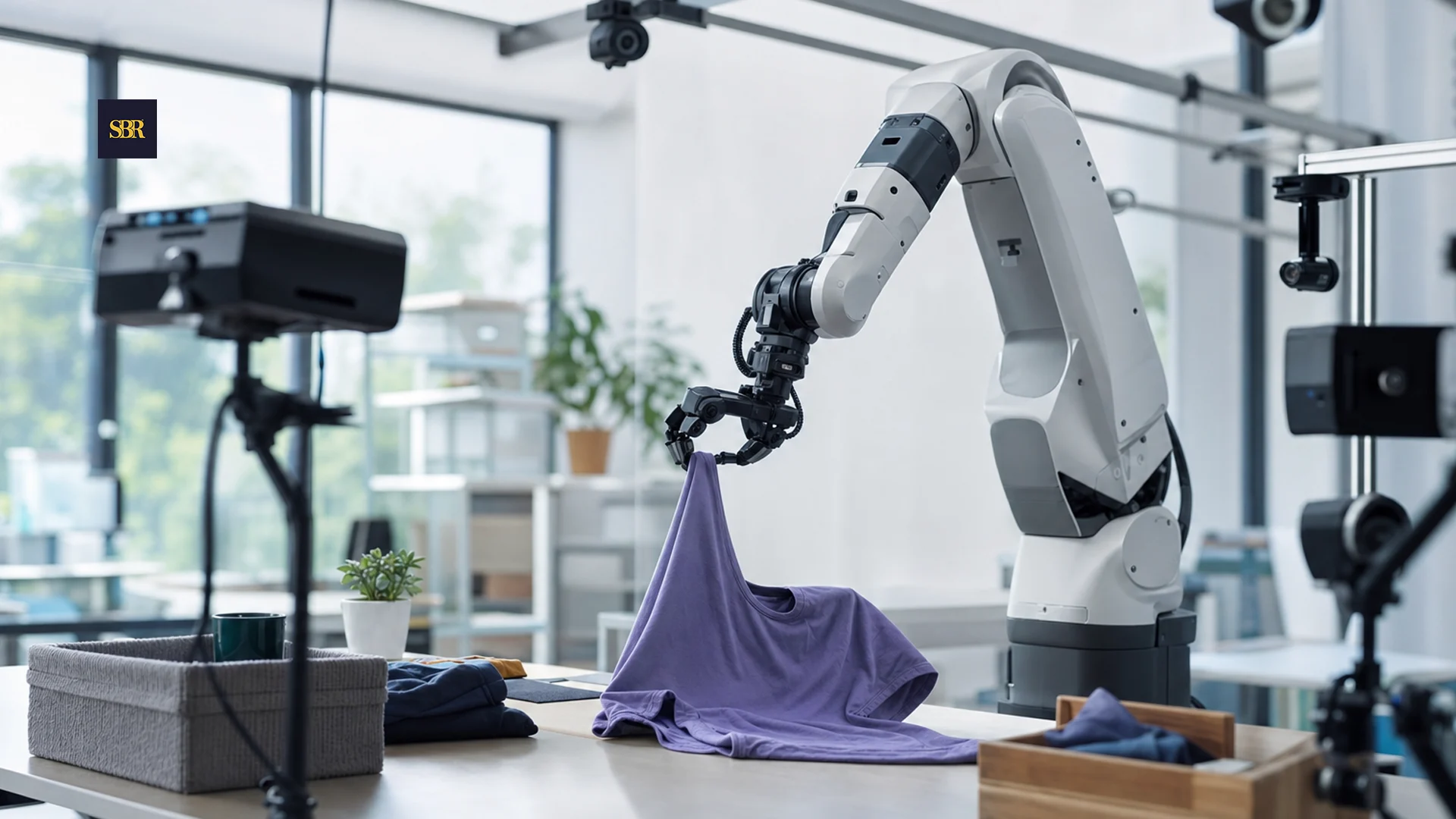
The company gathers data through remote teleoperation as well as human collectors who wear sensors while performing everyday tasks such as folding clothes and flattening boxes. XDOF plans to hire and train data collectors worldwide, including teleoperators who steer robots remotely and egocentric operators who record movement data with body sensors.

Photo credit: XDOF
Robotics Faces a Data Shortage
For physical robots, gathering useful real-world data remains a significant challenge. Unlike language systems that initially trained on large portions of the internet, robots do not have a comparable dataset covering physical activity.
Investors have compared XDOF with Scale AI and Mercor, which built data-labeling businesses around AI. Other startups collecting real-world data for robot training include Mecka AI, while Scale AI and Micro1 have expanded their human-data businesses beyond language applications. XDOF is among the companies collecting real-world data as robotics systems become more capable and require larger datasets.
XDOF collects data from physical-world activities to train robots. Unlike large language systems, which were initially trained on vast amounts of internet data, physical robots do not have an equivalent dataset for learning from real-world activity.