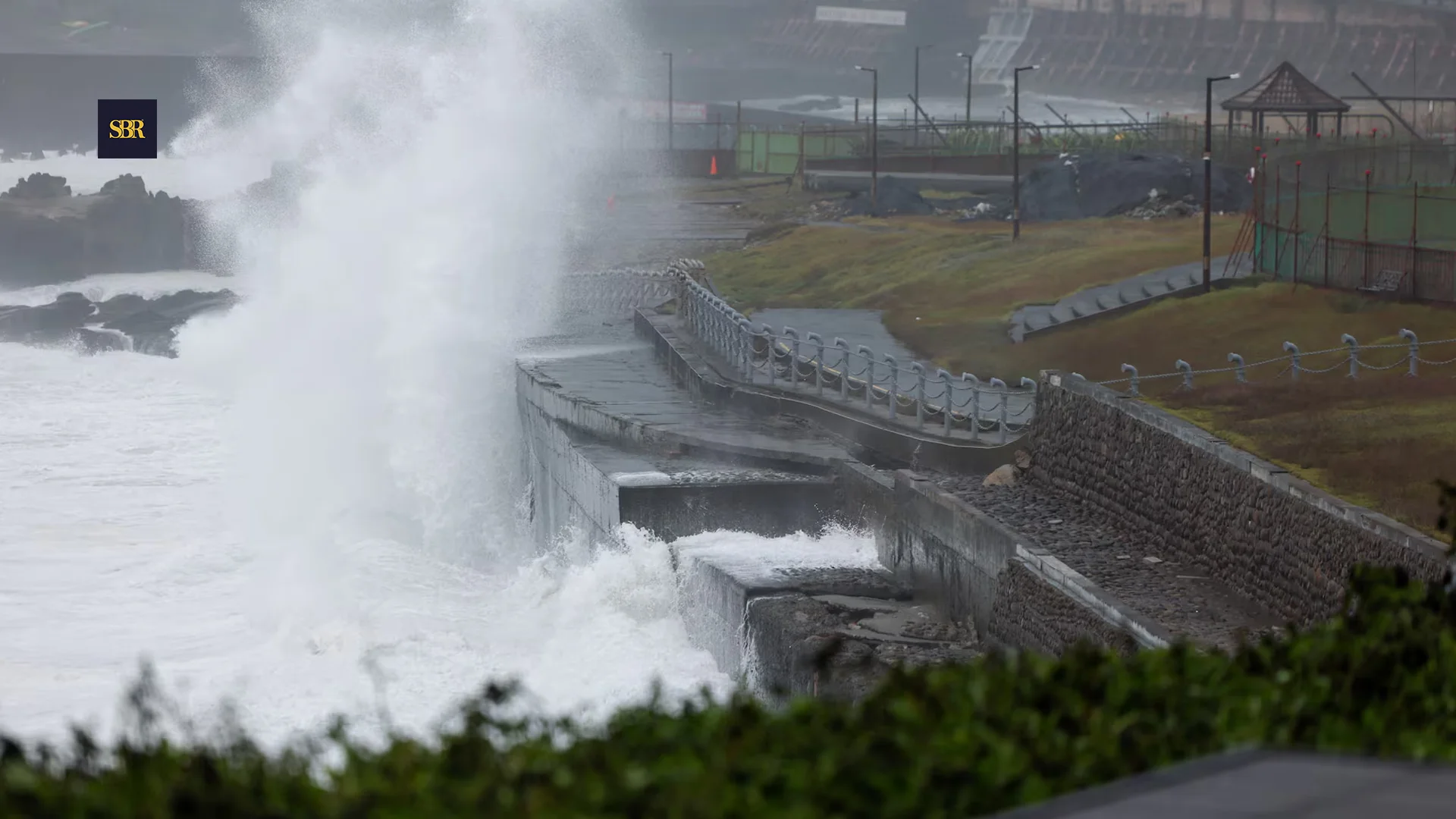
TAIPEI, Taiwan, Oct.23, 2026 — Hundreds of flights across East Asia were canceled Friday as Typhoon Champi brought Taiwan to a standstill, with schools and offices shut across much of the island and hundreds of people forced to evacuate. In Japan, more than 160 flights across four airlines were canceled as the storm neared Okinawa, while power outages affected nearly 8,400 households, the BBC reported.
On Friday afternoon, Champi was generating wind gusts of 191 kilometers per hour (119 miles per hour). Earlier in the week, the storm reached maximum sustained wind speeds of 185 miles per hour (298 kilometers per hour) over the Philippine Sea, making it the strongest storm recorded worldwide so far this year. The wind speed was equivalent to that of a Category 5 hurricane. Initially classified as a “super typhoon,” Champi weakened on Wednesday as it moved across the sea.
Weather agencies in Taiwan, Hong Kong and Japan forecast that the storm’s eye would pass offshore without making landfall in Taiwan. However, a forecaster at Taiwan’s Central Weather Administration told Reuters that landfall remained possible, especially if the storm “stalls, loops or wobbles from side to side” as it approaches.
Air Travel Disrupted
Japan Airlines, All Nippon Airways (ANA) and Skymark Airlines canceled more than 100 flights between Thursday and Sunday, affecting more than 11,000 passengers. The cancellations were concentrated on domestic routes, particularly services connecting Okinawa’s remote islands with other parts of Japan.
ANA canceled flights to and from Miyako and Ishigaki airports, while Japan Airlines suspended services to several islands in Okinawa Prefecture and canceled flights connecting Japan with Taiwan. The Japan Airlines Group announced 120 cancellations on October 22 and 23, while ANA canceled 55 flights over the same two days.
Ferry services were also suspended around Ishigaki, cutting off another transport link for residents and visitors traveling between the islands. Champi was forecast to move north across the East China Sea before nearing Japan’s Kyushu region as an extratropical cyclone early the following week, with heavy rain also possible across parts of Honshu.

Taiwan Closes Schools
Schools and offices across Taiwan were closed Friday as Champi approached the island. Work and classes were suspended in nearly all of Taiwan’s 22 counties and cities in what is colloquially known as a “typhoon holiday.” Only Kinmen County, an archipelago west of Taiwan’s main island, continued normal work and classes.
Taiwan’s stock exchange, valued at $5 trillion (£3.7 trillion), also closed Friday because of the severe weather as authorities prepared for heavy rain and strong winds across the island’s northeast. Champi was forecast to dump up to 90 centimeters (35 inches) of rain in the region on Saturday.
Taiwan’s Central Weather Administration forecast that rainfall would peak Saturday morning and continue until Saturday evening. Authorities urged residents to stay away from coastal areas and mountains. The storm had already caused one death after a person was swept away by waves, authorities said. Champi also injured 171 people and forced another 1,000 people to evacuate.
Philippines Also Hit
Champi also brought heavy rain and strong winds to Batanes, a Philippine island chain south of Taiwan. Photographs posted on the local government’s Facebook page showed waves crashing into seaside villages, and roads closed to traffic. No casualties had been reported in Batanes at the time.
The storm’s movement remained uncertain. Although weather agencies in Taiwan, Hong Kong and Japan forecast that its eye would pass without making landfall in Taiwan, the Central Weather Administration warned that a change in direction could alter the forecast. Forecasters could not rule out landfall if Champi “stalls, loops or wobbles from side to side” as it approaches.
After passing Taiwan’s northeastern tip and the Okinawa islands, Champi was expected to hover over waters off China’s eastern coast before curving farther northeast toward Japan’s main island.

Photo credit: Pexels
El Niño and Typhoons
Champi is the latest in a series of intense typhoons as a Super El Niño heats the Pacific Ocean and fuels storms. At its peak earlier this week, Champi recorded maximum sustained winds of 185 miles per hour (298 kilometers per hour) over the Philippine Sea, making it the strongest storm worldwide so far this year. The storm was initially classified as a “super typhoon” before weakening on Wednesday.
The region is experiencing one of its most active typhoon seasons in years. Champi is Japan’s 30th typhoon of the year, marking the first time since 2013 that the country has recorded that many storms in a single year.
An unusually strong El Niño is contributing to the recent frequency of storms. The naturally occurring phenomenon affects the Pacific Ocean every few years and can trigger extreme weather events ranging from droughts to typhoons. Champi’s passage has disrupted air travel, electricity supplies, financial-market operations and daily life across East Asia.
Taiwan’s stock exchange, valued at $5 trillion (£3.7 trillion), also closed Friday because of the severe weather as authorities prepared for heavy rain and strong winds across the island’s northeast. Champi was forecast to dump up to 90 centimeters (35 inches) of rain in the region on Saturday.