SAN DIEGO, Calif., April 29, 2026 — Firestorm Labs has secured $82 million in Series B funding to expand its portable manufacturing systems for drones and related defence hardware. The round supports the company’s plan to move production closer to where equipment is required, using container-based units that can produce and repair systems outside traditional factory settings. The development reflects growing interest in distributed manufacturing models within defence procurement cycles, particularly for unmanned systems that require rapid iteration and field adaptability.
The funding round brings Firestorm Labs’ total capital raised to approximately $153 million. Investors participating in the Series B include Washington Harbour Partners, NEA, In-Q-Tel, Lockheed Martin Ventures, and Booz Allen Ventures. The mix of venture capital and defence-aligned investment groups reflects strong institutional interest in production systems that can operate beyond fixed industrial sites.
The company originally focused on drone production but shifted toward deployable manufacturing after feedback from defence customers highlighted limitations in conventional supply chains. That direction has shaped its current work on mobile fabrication units designed to function in remote or operational settings, where speed of replacement and repair is critical to ongoing missions.
Funding Support from Defence-Focused Investors
The latest funding round positions Firestorm Labs for wider deployment of its manufacturing systems. The participation of defence-related investors such as In-Q-Tel and Lockheed Martin Ventures signals continued interest in technologies that support distributed production capability for unmanned systems and field equipment.
Rather than concentrating investment into a single production facility, the company’s model supports a network of mobile units that can be deployed across different regions. This allows production capability to be placed closer to demand points, particularly in environments where logistical routes are limited or exposed to disruption.
The funding will support the expansion of manufacturing capacity for Firestorm’s container-based systems as well as further development of drone designs intended for rapid production cycles.

Container-Based Production System
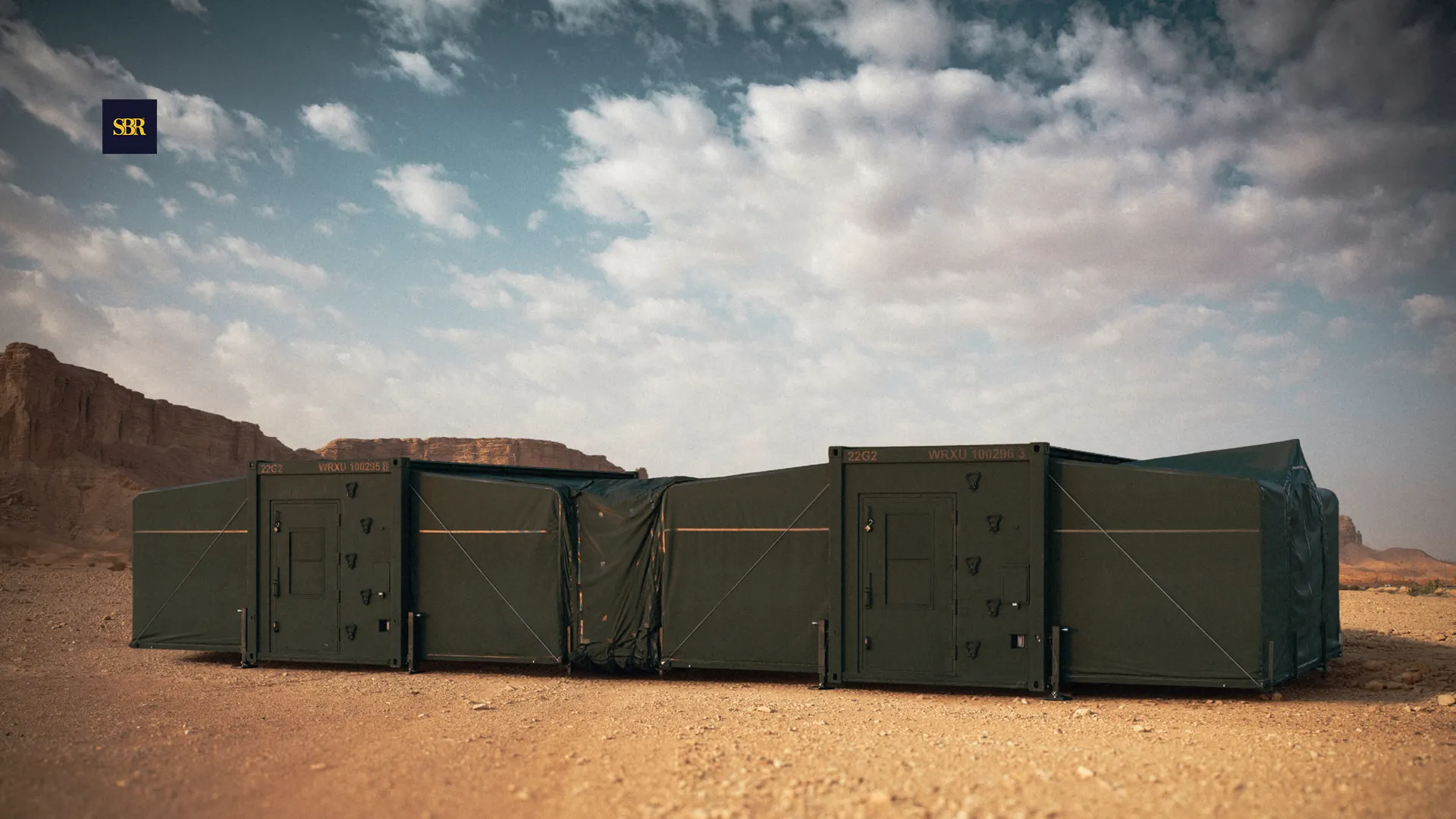
xCell is a portable manufacturing unit housed inside modified shipping containers. Each unit carries industrial-grade additive manufacturing equipment that produces drones and replacement components on site, reducing reliance on fixed production facilities.
Each xCell unit is designed to operate independently once deployed. It can produce configurable unmanned aerial systems in under 24 hours, depending on mission requirements. The system is also capable of producing spare parts for existing equipment, allowing maintenance operations to take place closer to operational areas rather than relying on distant supply chains.
The use of modular manufacturing units reduces dependence on large fixed factories. Instead of transporting finished systems over long distances, production can be relocated closer to where equipment is required. This model also allows for design updates to be implemented more rapidly, since production systems are not tied to a single central facility.
Firestorm Labs has developed its systems with support from industrial partners, including HP, which contributes to the additive manufacturing technology used within xCell units. The integration of industrial printing capability enables consistent production of structural components for unmanned systems within a controlled mobile environment.
Deployment in Defence Environments
Firestorm Labs’ systems are being developed for use in defence settings where speed of production and repair is critical. The company has worked with U.S. military research organisations and special operations units to test its mobile manufacturing model in operational conditions.
These deployments include environments where traditional supply chains face limitations due to distance, terrain, or operational constraints. In such settings, the ability to produce drones and components near deployment areas reduces downtime and supports continued use of equipment without long logistical delays.
The systems are particularly relevant for unmanned aerial vehicles, which often require rapid replacement or modification based on changing mission requirements. By producing drones closer to deployment zones, operators can adjust specifications more quickly and maintain equipment availability over extended periods.
Firestorm Labs has also explored applications in regions such as the Indo-Pacific, where geography and distance create challenges for conventional supply models. Mobile manufacturing units allow for distributed production across multiple locations rather than reliance on a central facility.
Scaling Mobile Manufacturing Capacity
With new funding secured, Firestorm Labs is focusing on expanding deployment of its xCell units and increasing production capacity across its system. The company is also developing an open production model that allows external designs to be manufactured within its mobile units, extending the range of systems that can be produced beyond its own drone designs.
This model supports collaboration with defence contractors and other technology developers who require flexible production options for unmanned systems and field equipment. It also allows production to be adapted based on specific operational requirements without requiring changes to fixed factory infrastructure.
Revenue generation for Firestorm Labs includes hardware sales, leasing arrangements for mobile units, and service agreements related to maintenance and production support. The company works primarily with government and defence customers, although there is potential for broader adoption in sectors that require distributed manufacturing capability.
The expansion of mobile manufacturing systems reflects a broader movement within defence procurement toward decentralised production methods. Firestorm Labs is building its role within this space by focusing on deployable systems that bring fabrication capability closer to end-use environments, reducing reliance on distant manufacturing hubs and supporting more flexible production cycles for unmanned systems.
xCell is a portable manufacturing unit housed inside modified shipping containers. Each unit carries industrial-grade additive manufacturing equipment that produces drones and replacement components on site, reducing reliance on fixed production facilities.








 ft...webp)
 sme.webp)
FT (1).webp)
 ft (2).webp)
 ft.webp)
 ft.webp)
 ft.webp)
 ft.webp)