Cando Solar is a solar technology company that develops advanced photovoltaic systems and manufacturing technologies for a range of energy and industrial applications.
The company’s rollable crystalline silicon HJT solution, Cando Solar Cloth, is engineered for aerospace, mobility, and distributed energy use cases. It addresses long-standing engineering challenges through stress-free material integration, enabling different materials to function together in flexible solar systems without compromising durability or performance.
Cando Solar also develops firm-light PV modules along with advanced manufacturing technologies such as heterojunction (HJT), busbar-less architecture, metallization pattern printing, and lightweight module design.
The company serves LEO satellites, drones, robotics, electric vehicles, modern infrastructure, and portable electronics segments, as well as emerging segments such as decentralised energy systems and future personal satellite applications.
Across its portfolio, Cando Solar prioritises lightweight design, cost efficiency, high reliability, and ease of deployment, enabling wider access to advanced solar energy systems across industries.
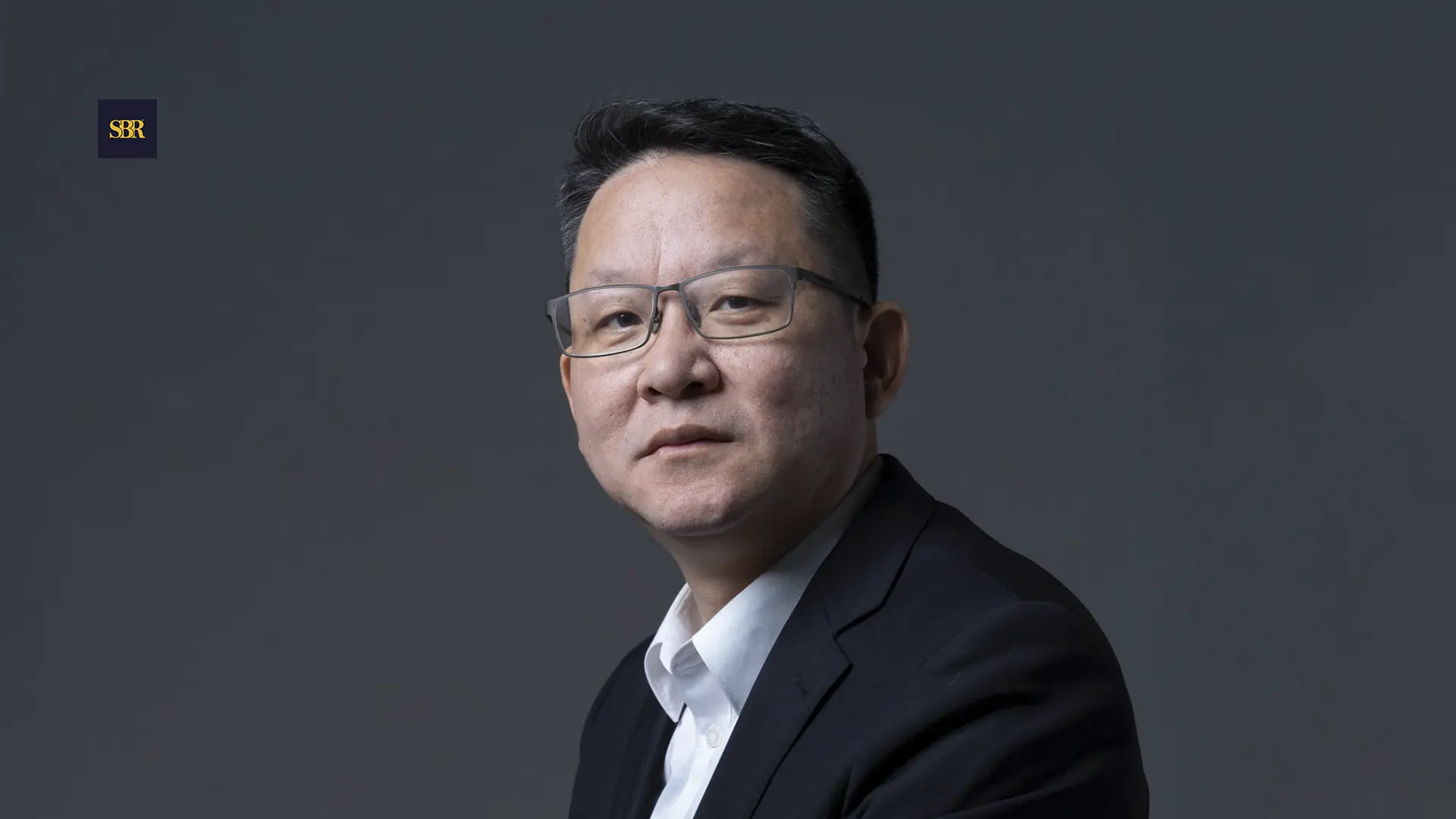
SME BUSINESS REVIEW reached out to Dr. John Huang, founder and CEO of Cando Solar, for an interview to discuss the company’s origins, technological development, key focus areas, and long-term vision for solar innovation. Here’s what Dr. Huang had to say.
Interview Excerpts
How did Cando Solar come into existence, and what challenges did it face in the early days?
I founded Cando Solar in Singapore in 2021, building on more than 20 years of research and development and my long-standing ambition to create genuinely innovative energy products. From the beginning, we stepped into a highly challenging environment. While the industry raced to the bottom on price, we chose to race to the top on physics. Cando Solar was founded on a contrarian bet that the future of solar isn’t cheaper panels, but lighter ones.
The market was no longer satisfied with incremental improvements. There was a growing demand for differentiated solutions. For us, this meant going deeper, identifying widespread yet often overlooked problems that had persisted across the industry for years. It was not just about recognizing these pain points, but about using our own technological expertise to develop products that could truly address them and deliver practical value to customers.
One of the toughest challenges we faced was how to achieve stress-free integration between different materials in flexible solar systems, a core issue in solar engineering. This is a complex problem that many have attempted to solve, and our journey involved repeated technical setbacks and continuous iteration. Each failure, however, gave us sharper insight into the limitations of conventional approaches.
Breaking away from traditional solar panel design frameworks was another critical step. It required us to question long-established assumptions and rethink how solar products could be engineered and deployed. That process was not simple, but it was necessary to create solutions that stand apart.
Those early challenges were demanding, but they played a decisive role in how we moved forward.
As a pioneer solar technology company, what are Cando Solar’s key focus areas?
As a pioneer in solar technology, we focus on identifying and addressing widespread, long-standing problems in the market. Our work starts with identifying persistent pain points that have gone unresolved, and then applying our technological expertise to develop solutions that solve them in a way that matters to customers.
We focus on the commercial aerospace solar sector, where we address the high cost of solar wings for satellites. This enables the development of commercial microsatellites and makes space-based applications more viable at scale.
We also place strong emphasis on consumer-grade solar PV products that are practical, durable, and easy to use. Our goal is to enable large numbers of end users to access clean electricity with minimal cost and effort, making solar adoption more accessible globally.
Another key focus is how solar performance is measured. Instead of relying solely on efficiency per square meter, we prioritise efficiency relative to weight, which is critical for applications where lightness and flexibility matter.
In line with this, we develop lightweight, flexible solar cloth for both space and terrestrial use. At the same time, we prioritise silicon-based technologies that can scale effectively, rather than relying on high-cost or unproven materials.
Beyond individual products, we focus on system-level value, including energy packaging, deployment, and modular integration. This makes our solutions more adaptable and easier to implement across different use cases.
We also focus on expanding access to energy and building more decentralised energy systems, with the aim of wider adoption of solar power.
Cando Solar Cloth has been introduced as a rollable crystalline silicon HJT solar solution. Could you walk us through its core technological features?
Cando Solar Cloth is a rollable crystalline silicon HJT solar technology designed to deliver high efficiency in a lightweight, flexible form. It operates at a weight of 300 to 900 grams per square metre, with a weight-to-power ratio of 1 to 5 grams per watt. This makes it well-suited for applications where weight is a constraint, particularly in aerospace and portable energy use cases, and it achieves efficiency levels in the range of 23 to 35 percent.
Cando Solar Cloth uses a stress-free material integration method that allows different materials to function together within a single flexible system, addressing a long-standing challenge in solar engineering where material mismatch often leads to durability issues. It is based on silicon, which benefits from a mature supply chain and proven scalability, rather than relying on high-cost or less established materials.
These characteristics deliver high reliability alongside significant cost advantages. Cando Solar Cloth can reduce overall solar costs by up to 90 percent and lower satellite-related costs by around 30 percent, making it suitable for both terrestrial and space applications.

What are the primary applications of Cando Solar Cloth, including its use in areas such as LEO satellites and other deployment environments?
Cando Solar Cloth is designed for applications where weight, flexibility, and deployment efficiency are critical. One of its primary use cases is in LEO satellites, where reducing weight directly lowers launch costs and improves system efficiency. This makes it particularly valuable for next-generation satellite platforms. It is also well-suited for robotics and drones, where weight constraints strongly influence performance, endurance, and design flexibility.
Beyond aerospace and mobility systems, it can be applied in electric vehicles and modern building environments, where lightweight and adaptable solar integration is becoming a critical requirement. In the consumer and electronics segments, it powers portable electronics through modular, customizable integration, enabling flexible energy solutions for compact devices. It also opens possibilities for personal satellite systems, contributing to a transition toward decentralised energy access and new deployment models.
What other core technologies form part of Cando Solar’s broader portfolio? Please share a brief overview.
Beyond Cando Solar Cloth, our technology portfolio includes several areas focused on efficiency, safety, and scalability. Firm-light PV module technology is a key part of our platform. It features an insulated edge design with strong safety performance and a lightweight frame suited for lightweight components. Despite its reduced weight, it maintains very high structural strength. The full series of firm-light PV products weighs 4–6 kg per square meter, fully meeting the load requirements of most low-load and old rooftops. It requires no structural reinforcement during installation, saving overall costs while raising power generation efficiency by 5–10%.
Cando Solar also develops heterojunction technology (HJT), busbar-less architecture, advanced metallization pattern printing, and lightweight module design. Together, these technologies enable Cando Solar to achieve higher performance, improve material efficiency, and lower the cost of solar manufacturing in large-scale production.
Who are Cando Solar’s key clients, and how does the company address their needs?
Cando Solar serves a range of clients across energy-intensive industries and advanced technology sectors. For enterprises seeking to address growing energy consumption through green electricity, Cando provides cost-optimised, customised commercial and industrial distributed photovoltaic solutions.
In the aerospace and satellite sector, the company works with operators to address key constraints around weight, launch costs, and power generation, helping improve overall system efficiency in space applications. For drone and robotics manufacturers, Cando Solar delivers solutions designed to meet strict weight limitations without compromising performance. The company also supports firms in electric vehicles, construction, and consumer devices by offering lightweight, modular, and customisable power integration that can be adapted to different product and infrastructure needs.
Across all client segments, Cando Solar addresses requirements through lightweight design, cost efficiency, high reliability, and easy deployment.
What are your short- and long-term goals, and where do you see your priorities in the coming years?
In the short term, our focus is on scaling Cando Solar Cloth for aerospace and other niche high-growth markets, while validating its performance as a silicon-based lightweight solar solution.
In the long term, our ambition is to move toward energy abundance, with solar technology adopted widely across industries. This includes reducing dependence on centralized power structures and, eventually, enabling concepts such as individual satellite ownership.
Across both horizons, our priorities remain consistent to improve scalability, reduce costs, improve system integration, and build a strong foundation of global patent-backed innovation.
ABOUT | DR. JOHN HUANG
Dr. John Huang is the founder and CEO of Cando Solar. He led more than 20 years of research and development, culminating in the launch of Cando Solar in 2021. Dr. Huang has held key positions, including Director and CTO at renowned enterprises such as TSMC, Trina Solar, GCL Group, and Risen Energy. He has also served as a core member of the SEMI Standards Committee and a member of the IEC Photovoltaic Standards Committee.
His vision is space energy decentralisation and energy abundance, with a focus on redefining solar performance by weight. Under his leadership, Cando Solar has developed breakthrough technologies, including stress-free material integration and the Cando Solar Cloth solution. He has also secured 170 worldwide patents across related innovations.
His motto is, “If this can be done by anyone, we don’t do it. But if it has never been done before, then we ‘can do’.”