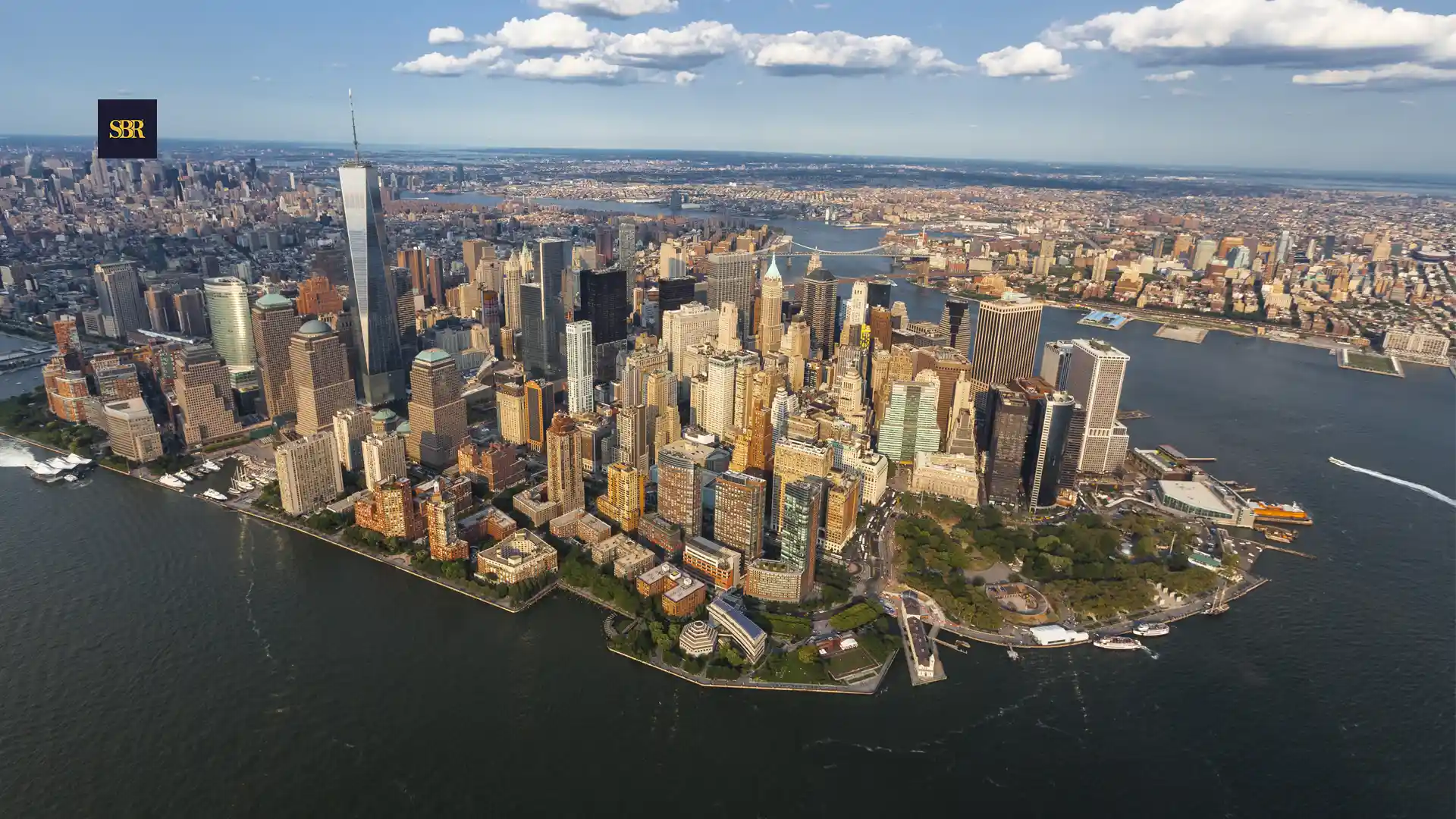
NEW YORK, Sept. 7, 2026 — Lower Manhattan has spent a quarter-century rebuilding more than buildings. As The Wall Street Journal recently reported, the district has emerged from the devastation of Sept. 11 with a far more diverse economic and residential identity. Since the attacks destroyed the World Trade Center and damaged millions of square feet of surrounding commercial property, the district now has new housing, offices, transportation links, restaurants, hotels, cultural venues and entertainment spaces.
The scale of the rebuilding is difficult to separate from the history of the neighborhood. The World Trade Center site became one of the largest urban redevelopment projects in the United States, with more than $20 billion in public and private investment. Yet the changes extend well beyond the 16-acre site. Older office buildings have become apartments, new businesses have joined the financial firms that once dominated downtown, and streets once designed around office workers now serve a growing residential population. According to figures cited by the Alliance for Downtown New York, the neighborhood’s population has roughly tripled since 2000. More than 230,000 people now work there, while the number of apartments has grown from about 13,000 in 2000 to more than 37,000 by early 2026.
Rebuilding the World Trade Center
The destruction of the World Trade Center left Lower Manhattan with damaged transportation systems, disrupted utilities, and a vast shortage of usable commercial space. The seven-building complex was destroyed, while nearby properties also suffered severe damage. Businesses moved elsewhere, workers were displaced, and questions about the future of the Financial District became unavoidable. Rebuilding was never simply a matter of replacing office towers. Public officials, property owners and civic organizations debated the role of the memorial, the amount of commercial space and whether housing should form part of the district's future. The process took years and involved disputes over design, financing and land use.
The result eventually became a mixed-use World Trade Center complex. The site now contains roughly 10 million square feet of office space, almost 500,000 square feet of retail space, a transportation hub, the 9/11 Memorial and Museum, and the Perelman Performing Arts Center. American Express added another milestone in July 2026 when it broke ground on a 55-story global headquarters at the site. The rebuilt district also reintroduced streets through the site, making the World Trade Center part of the surrounding neighborhood rather than an isolated superblock. The memorial remains a major place of remembrance, while the surrounding buildings and public spaces serve ordinary daily activity.

Office-to-Residential Conversions Gain Ground
One of the most consequential changes occurred outside the World Trade Center site. Dozens of older office buildings were converted into residential properties, giving Lower Manhattan a population that remains in the neighborhood after business hours. Government incentives played an important role in making some conversions financially viable. Federal assistance after the attacks included grants for households that stayed in or moved downtown, while developers received tax benefits and financing opportunities for redevelopment projects. The conversion of 90 West Street illustrates how dramatically the district's property base has changed. The building, located near the World Trade Center site, suffered major damage when steel from the collapsing South Tower struck it. Developers later restored the property and converted it into roughly 410 apartments.
Lower Manhattan now has 23 office-to-residential conversion projects either planned or under construction, according to the Alliance for Downtown New York. The growth of housing has also changed the economics of neighborhood businesses. Restaurants, bars, shops and other services have a resident customer base rather than relying almost entirely on workers who leave at the end of the business day. The district now has activity across more hours of the day, while Stone Street, waterfront venues and other parts of the neighborhood attract residents, workers and visitors.

Photo credit: NYT
Downtown Employment Moves Beyond Finance
For much of its modern history, Lower Manhattan was closely associated with Wall Street and financial services. That identity remains important, but employment has become more diverse. Financial-services and real-estate companies accounted for roughly two-thirds of downtown employment 25 years ago. They now represent about one-third, according to the Alliance for Downtown New York. Technology, media and advertising companies have taken a larger role, with companies such as Spotify, Condé Nast, Uber and WPP Media among the businesses with a downtown presence. Cost has been one factor in attracting companies, with office space downtown available during parts of the rebuilding period for roughly 30% less than comparable space in Midtown. Government incentives and major investments in transportation also made the district more attractive to employers.
Spotify chose Four World Trade Center for its New York offices in 2017 as the company prepared to become publicly traded. The company later established connections with the Perelman Performing Arts Center for podcasts, talks, and music programming. Such activity illustrates how office tenants have become linked to the cultural infrastructure around them. The change has also affected commercial property, with offices now sitting alongside apartments, hotels, restaurants, entertainment venues and cultural institutions. Lower Manhattan is no longer defined by a single dominant industry, giving the district several sources of economic activity.
Tourism Adds Another Dimension to Downtown
Tourism and entertainment have added another layer to Lower Manhattan's economy. The neighborhood had only six hotels on Sept. 11, 2001. By 2026, it had 42. Visitors now come for the World Trade Center, the memorial, restaurants, waterfront attractions and cultural venues. Pier 17 has become part of that visitor economy, with its rooftop concert venue accommodating thousands of spectators. Restaurants and bars around Stone Street have also given the Financial District a social life that would have been unusual when the area emptied after office hours.
The transformation is not without unfinished business. Downtown's office vacancy rate stood at 22% in July, compared with about 18% in Midtown, according to Cushman & Wakefield. A former Deutsche Bank site near the World Trade Center also remains undeveloped despite plans for roughly 1,200 apartments. Still, Lower Manhattan has gained residents, diversified its employment base and created destinations that attract people who do not work there. For a younger generation, the World Trade Center site is both a place of remembrance and part of a normal commute, lunch break, evening out or walk home. Twenty-five years after the attacks, new offices, homes, businesses and public spaces exist alongside the memorial to those who were lost, making Lower Manhattan a downtown where commerce, housing, tourism and civic memory occupy the same streets.
One of the most consequential changes occurred outside the World Trade Center site. Dozens of older office buildings were converted into residential properties, giving Lower Manhattan a population that remains in the neighborhood after business hours.







.webp)