WASHINGTON, Nov. 4, 2026 — The United States spent $5.3 trillion on healthcare in 2024, or $15,474 per person. Healthcare spending accounted for 18% of the country’s gross domestic product, according to the Centers for Medicare & Medicaid Services (CMS). Yet millions of Americans remain uninsured, while many people with insurance struggle to pay for treatment, prescriptions and routine medical visits.
The U.S. Census Bureau reported that 26.7 million people, or 7.9% of the population, lacked health insurance for the entire year in 2025. Insurance coverage also does not guarantee that patients can afford the care they need. A KFF survey published in October 2026 found that 28% of adults had postponed or skipped medical care because of the expense during the previous 12 months. Another 22% reported problems paying medical bills, while 43% said they had not taken medicine as prescribed because of the price.
These figures point to a gap between having health insurance and being able to pay for healthcare. Medicare for All proposes a nationwide public insurance program that would cover residents and remove patient payments for covered services. Whether it can make healthcare more affordable depends on how the government finances the program, pays medical providers, and manages demand for care.

Why Healthcare Costs So Much
The U.S. healthcare system relies on several sources of insurance, including employer-sponsored plans, individual policies, Medicare and Medicaid. Each has its own eligibility rules, payment arrangements and administrative requirements. Patients may also face separate bills from hospitals, physicians, laboratories and other providers.
High prices account for much of the country’s healthcare spending. The United States spends more per person than other high-income countries, even though Americans generally use fewer healthcare services. A September 2025 analysis by Peterson-KFF Health System Tracker found that U.S. healthcare spending reached $13,432 per person, compared with an average of $7,393 across 11 comparable countries.
Insurance premiums, deductibles, copayments, and prescription drug prices add to the amount households pay. People without insurance may face the full price of treatment, while insured patients can still delay care if their plans require large out-of-pocket payments.
Medicare for All would change how healthcare is financed and paid for. Instead of relying on several public and private insurance arrangements, the proposed system would use one national public insurance program to cover eligible services.

Who Gets Coverage
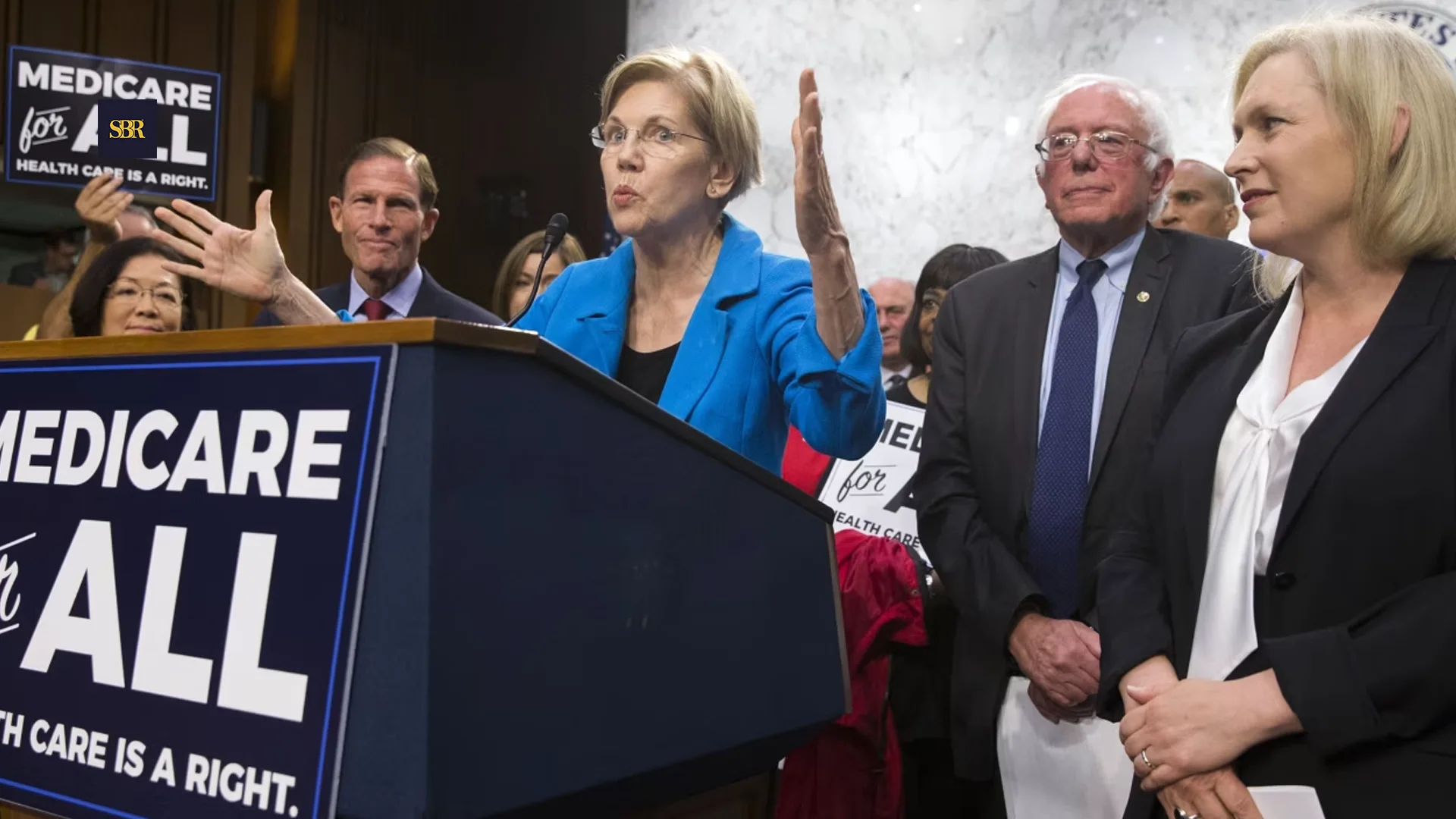
The House Medicare for All Act of 2025, H.R. 3069, was introduced by Rep. Pramila Jayapal on April 29, 2025. Sen. Bernie Sanders introduced a companion measure, S. 1506, in the Senate on the same day. Both bills remain proposals and have not become law.
The House bill would establish a national health insurance program for all U.S. residents. Covered services would include hospital care, physician visits, preventive services, emergency treatment, prescription drugs, mental healthcare, dental care, vision care, hearing services, and long-term care.
The proposal would also remove most of the link between health insurance and employment. Workers would no longer need to rely on an employer-sponsored plan to obtain their primary health coverage. People who change jobs, become self-employed or leave the workforce would remain covered under the national program.
The bill does not require the government to own hospitals or employ physicians. Private hospitals, medical practices and other providers could continue operating while receiving payments through the public insurance program. Patients would retain the right to choose their healthcare providers.
What Patients Pay
Employer-sponsored insurance illustrates the financial burden many households already face. KFF’s 2026 Employer Health Benefits Survey found that the average annual premium for family coverage reached $28,303. Workers paid an average of $7,471 toward that amount, with employers covering the remainder.
The survey also found that the average annual deductible for single coverage among workers enrolled in plans with a general deductible was $1,955. Patients must generally pay this amount for covered services before their insurance begins paying according to the plan's terms.

Medicare for All would remove premiums, deductibles, and copayments for services covered by the national plan. Patients would not have to pay a monthly insurance premium to retain coverage or meet a deductible before receiving covered treatment.
That change could leave households with more money for housing, food, education, and other expenses. Workers would also be less dependent on employer-sponsored insurance when deciding whether to change jobs or start a business.
However, eliminating premiums does not mean healthcare would be free to the country. The government would need to collect revenue through taxes and other public funding sources. The effect on each household would depend on the tax structure and how much it currently pays in premiums and out-of-pocket medical bills.
Lowering Drug Prices
Prescription medicines account for a significant share of U.S. healthcare spending. CMS reported that national prescription drug spending reached $467 billion in 2024, up 7.9% from the previous year.
Medicare for All would give the national program broad purchasing and negotiating authority. A single public payer covering the population could negotiate prices with pharmaceutical manufacturers rather than relying on separate negotiations across numerous insurers and benefit plans.
The federal government has already used drug price negotiation under the Inflation Reduction Act. The first 10 Medicare Part D drugs selected for negotiation received new maximum fair prices that took effect on Jan. 1, 2026. CMS reported that these prices were 38% to 79% below the drugs' 2023 list prices.
That experience shows that federal negotiation can produce prices below manufacturers’ previous list prices. However, the savings under Medicare for All would depend on the drugs included, the terms negotiated, and the prices paid by the national program. Lower negotiated prices would not automatically translate into equal savings for every patient.
Cutting Insurance Paperwork
The U.S. system requires insurers, employers, healthcare providers and patients to manage a range of billing and payment procedures. Hospitals and medical practices must handle claims, verify coverage, negotiate payment rates and address disputes with different insurers.
A national public insurance program could reduce some of this administrative work by using common coverage rules and payment procedures. Hospitals and physicians would spend less time dealing with separate insurance requirements, while patients would have fewer insurance arrangements to understand.
International comparisons offer further context. The Commonwealth Fund’s 2024 report, Mirror, Mirror, assessed healthcare systems in 10 high-income countries across areas including access, care processes, administrative efficiency, equity and health outcomes. The United States ranked last overall.
A single-payer system would not remove every administrative expense. The national program would still need staff, technology, claims processing, fraud prevention and oversight. The extent of savings would depend on how efficiently it performs those functions and how much administrative work disappears from private insurers and healthcare providers.
How Hospitals Get Paid
Medicare for All would change the way hospitals and other healthcare providers receive payment. Under the House bill, institutional providers such as hospitals would receive global budgets. These payments would provide a set amount of funding for a defined period rather than requiring the hospital to bill separately for every service.
Individual practitioners would generally receive fee-for-service payments for the care they provide. The bill also includes provisions for national healthcare budgeting and funding for primary care and underserved areas.
Global budgets could give hospitals a more predictable source of revenue and reduce their dependence on the number of procedures performed. However, payment rates and budget allocations would need to cover staffing, equipment, medicines, facilities and patient care.
Hospitals that currently receive revenue from private insurance may face lower payments under a national fee schedule. The effect would vary according to each facility’s existing payer mix, operating expenses and the rates established by the government. Rural hospitals and facilities serving low-income communities would require particular attention when setting budgets.
Access to Preventive Care
When patients face high deductibles or copayments, they may delay routine appointments, screenings and treatment. Some wait until a health problem becomes more serious before seeking medical attention. That can lead to more expensive treatment and greater difficulty managing illness.
Medicare for All would cover preventive services without patient cost-sharing under the House proposal. People could seek covered screenings, vaccinations and routine medical visits without paying a deductible or copayment at the point of care.
Earlier diagnosis can allow physicians to treat some illnesses before they require emergency intervention or hospital admission. Regular access to primary care can also help patients manage long-term illnesses and follow prescribed treatment.
Removing patient payments alone, however, cannot guarantee timely appointments. The country would also need enough physicians, nurses, specialists, clinics, and hospital capacity to meet demand. Without sufficient medical staff and facilities, expanded insurance coverage could leave patients waiting longer for appointments.
Healthcare in Other Countries
Several high-income countries provide universal or near-universal healthcare through different financing arrangements. Their experiences show that universal coverage does not require every country to operate the same type of health system.
Taiwan uses a single-payer national health insurance program. Germany relies on statutory health insurance funds, while Australia combines a public Medicare program with private insurance. The United Kingdom finances its National Health Service primarily through taxation.
These systems differ in how they collect revenue, pay providers, regulate prices, and involve private insurers. None is an exact replica of the Medicare for All proposal in Congress.
The spending gap between the United States and other high-income countries is also significant. Peterson-KFF Health System Tracker reported that U.S. healthcare spending reached $13,432 per person, compared with $7,393 across 11 comparable countries.

The comparison suggests that universal coverage can exist alongside lower national healthcare spending. However, differences in wages, prices, healthcare use, population health, and public funding make direct comparisons difficult. The United States would need to account for its own healthcare infrastructure and provider payment arrangements when designing a national program.
Funding the National Plan
Financing would be one of the largest challenges in establishing Medicare for All. The House bill proposes a Universal Medicare Trust Fund, drawing on existing public healthcare funding and additional federal revenue. Its financing provisions include changes to federal tax policy.
Moving from private premiums and employer contributions to public financing would change where healthcare money comes from. Households and employers would no longer pay for the same private insurance arrangements, but taxpayers would contribute to the national program through the funding system established by Congress.
The federal budget would also record much more healthcare spending because the government would assume responsibility for payments currently made by private insurers, employers, and households. Higher federal spending would not necessarily mean that total national healthcare spending had increased.
A 2019 Congressional Budget Office analysis examined five illustrative single-payer systems, not the specific Medicare for All bill introduced in 2025. Under those scenarios, federal subsidies in 2030 were estimated to be $1.5 trillion to $3 trillion higher than under current law. Total national healthcare spending ranged from $700 billion below current law to $300 billion above it, depending on the design.
The estimates show why financing and program design matter. Lower provider payment rates and administrative savings could reduce national spending, while wider access to care and greater use of services could raise it. The final result would depend on tax revenue, payment rates, covered benefits, and the number of people receiving care.
The Doctor Shortage
Expanding insurance coverage would bring more people into the healthcare system, including those who currently delay or avoid medical treatment. That would create additional demand for physicians, nurses, specialists, and other medical professionals.
The United States already faces shortages in parts of its healthcare workforce. The Association of American Medical Colleges projected a physician shortage of up to 86,000 by 2036. Rural communities and underserved areas face particular difficulty attracting and retaining medical professionals.
Medicare for All would need to address workforce capacity alongside insurance coverage. The House bill includes provisions for primary care, workforce development and healthcare services in underserved communities. Federal funding for medical education, training programs and rural healthcare could also play a role.
Training more physicians and nurses takes years. Expanding coverage without preparing hospitals, clinics and medical practices for additional patients could lead to longer waits for appointments and treatment. Workforce planning would therefore be an essential part of implementation.
A Path to Universal Coverage
Replacing the existing insurance structure would require a transition involving employers, insurers, healthcare providers, government agencies and households. The House bill proposes a two-year transition.
Under the proposal, people younger than 19 and those aged 55 and older would become eligible after the first year. The remaining eligible population would enter the program after the second year. A temporary Medicare buy-in would also be available during the transition.
Private insurers would no longer be able to sell plans that duplicate benefits covered by the national program once the transition is complete. They could still offer policies covering services outside the national plan.
The change would affect private insurance companies, employer benefit arrangements and workers whose jobs involve administering private health plans. Some roles could become less necessary, while the public program would require staff for enrollment, payment administration, technology and oversight.
Hospitals and medical practices would also need time to adjust to new payment procedures. A transition plan would have to address existing contracts, billing systems, provider payments and patient records to prevent interruptions in care.

Photo credit: Pexels
Making Care Affordable
Medicare for All could make healthcare more affordable by removing premiums and patient payments for covered services, negotiating prescription drug prices and reducing the administrative work associated with multiple insurance arrangements. Universal coverage would also give people access to healthcare regardless of their employment status.
Those benefits would depend on how Congress designs and finances the program. Tax changes would determine how households and employers contribute, while payment rates would affect hospitals, physicians, and other providers. The government would also need to prepare the healthcare workforce and facilities for greater demand.
The proposal would not guarantee lower national spending or resolve every problem in healthcare delivery. The national healthcare system’s success would depend on its ability to provide comprehensive coverage, maintain sufficient medical capacity, and pay providers enough to deliver care.
For millions of Americans who delay treatment or struggle with medical bills, the central question is whether healthcare can be made affordable without limiting access to the services they need. Medicare for All offers one route to that goal, but its financial and operational details would determine whether the promise can be fulfilled.
A nationwide health insurance program could lower household medical expenses, extend insurance coverage and reduce administrative spending. The financial results would depend on tax policy, payments to healthcare providers and the country’s capacity to deliver medical services.