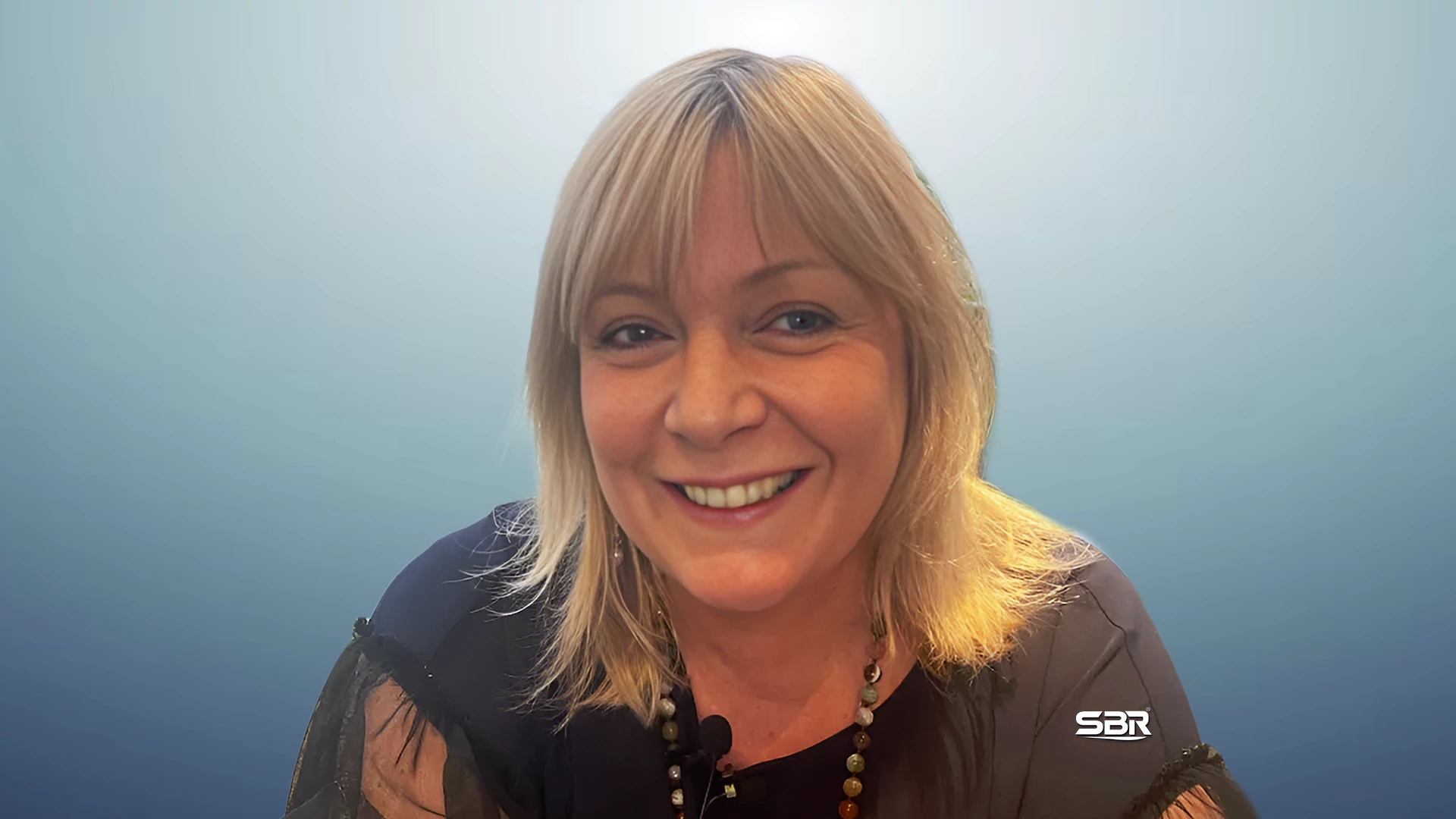
Olga Kotsur isn’t selling a retail fantasy. She isn’t chasing unicorn status either. What she’s doing instead—quietly but persistently—is modernizing the mechanics of in-store retail without upending its foundations. As co-founder and CEO of Mercaux, a London-based retail tech company, Olga has spent the better part of a decade building software that brings the agility of eCommerce into the physical store. It’s not glamorous work, but it’s essential.
“We’ve always been deliberate,” Olga begins, seated in a compact meeting room just above Mercaux’s main office in Soho. “Retail has spent years layering on technology with no real integration, and no thought for the people who actually use it—store staff, store managers, even customers. We wanted to change that.”
Mercaux was born out of a frustration she and her co-founder, Anton, shared after years in retail consulting. Store associates were expected to sell with little access to the data or tools that their online counterparts had. The physical store was, as Olga puts it, “digitally silent.” They saw an opportunity to bridge that gap—not with a gimmick, but with infrastructure.
“We’re not trying to replace people in stores,” she explains. “We’re trying to equip them. That distinction matters.”
From Consultant to Operator
Olga’s early career reads like the standard issue blueprint of a McKinsey alumnus. She worked across Europe, advising retail giants on growth strategies, cost-cutting programs, and tech adoption. But somewhere along the way, strategy stopped being enough.
“When you’re advising, you always want to follow through—but you rarely get to,” she says. “There’s a point where you either stay on the advisory side or cross over into building. I chose the second.”
That decision led her to INSEAD, then to a few formative months inside emerging tech firms in Berlin and Paris, before finally committing to Mercaux in 2015. The company launched in a challenging climate: major retailers were only beginning to wake up to their digital shortcomings, and the software market was already noisy with solutions chasing attention. Mercaux, however, didn’t rush to market with a half-finished MVP. It took time to get the product right.
“In retail, you don’t get second chances,” she says. “If you’re part of a store’s tech stack and something breaks—even for a minute—you’ve lost credibility. So we went deep with a few clients rather than wide with a hundred. That was the hardest part—waiting, refining, not scaling too early.”
The Retail Reality
Today, Mercaux works with global brands like River Island, French Connection, and Nike partner retailers. The core product suite includes clienteling tools, in-store checkout, product discovery apps, and analytics dashboards. It connects online and offline inventory, makes cross-selling easier, and reduces walkouts. But Olga resists the urge to call it a platform. She prefers “modular infrastructure,” a term that implies flexibility over centralization.
“I don’t believe in monoliths,” she says. “Retailers want to choose what they use. They want optionality. So we build in a way that lets them start small—then grow with us.”
When asked about the changing mood in retail—post-COVID, post-AI-hype—Olga doesn’t hesitate. The overcorrections are obvious to her.
“For a while, there was panic. Retailers were throwing money at ‘digital transformation’ with very little clarity,” she says. “Then came fatigue. Now, we’re in a period where people are asking harder questions. They’re no longer buying into tech for tech’s sake.”
That suits Mercaux. Its value isn’t in shock-and-awe demos, but in reducing inefficiencies—minutes saved per transaction, more conversions per visit, better use of staff time. It’s practical, even boring at times. But that’s the point.
“You can’t run a store on buzzwords,” Olga says. “You run it on operational clarity.”
Rebuilding Trust in Retail Tech
One of the more telling shifts Olga has observed is the move away from opaque, over-promising technology providers. Many retailers burned by failed integrations and costly ERP replacements are retreating to smaller, manageable rollouts. Trust is the new premium.
“There’s skepticism now—and that’s healthy,” she says. “Retailers are saying: ‘Show me, don’t tell me. Prove it in one store before we talk about fifty.’ And that’s exactly how we work.”
She tells a story about a client who piloted Mercaux in six locations but required a full breakdown of impact—sales metrics, staff feedback, incident logs—before greenlighting expansion. It wasn’t distrust, she says. It was due diligence.
“I respect that kind of rigor. It makes us better. And it makes the outcomes more durable.”
Durability matters to Olga. Mercaux isn’t backed by hundreds of millions in venture capital. It’s grown steadily through customer revenue and focused fundraising. The company has kept its team lean, its burn rate low, and its ambitions measured.
“We’re not here to build a short-term story for investors,” she says. “We’re building something that retailers will still want to use in five years—ten years even.”
European Tech Without the Noise
There’s a discipline to how Olga speaks about growth. She is candid about what Mercaux is and what it is not. It doesn’t claim to solve all of retail’s problems, nor does it chase market segments just because they’re hot. The company is based in London but operates across Europe and the Middle East. Expansion into North America has been cautious and strategic.
“I think European tech sometimes underestimates itself,” she says. “We’ve got engineering strength, we understand local markets, and we tend to build with more thoughtfulness. What we lack in capital, we make up for in resilience.”
She credits the company’s Eastern European engineering team—many of whom she’s worked with since day one—as one of its core advantages. Speed, reliability, and ownership are more than cultural markers, she says. They’re operational strengths.

Asked whether she’s ever felt pressure to relocate to Silicon Valley or adopt a more aggressive growth posture, she pauses.
“There’s always pressure to be louder,” she admits. “But I’ve found that consistency matters more. Our clients stay with us. That means something.”
What’s Next for Mercaux
Looking ahead, Mercaux is focused on expanding its analytics layer—giving retailers more insight into what happens in stores, not just online. There’s also a renewed focus on personalization, not through invasive data scraping, but by giving associates better tools to remember and serve returning customers.
But the big push in 2025, Olga says, is interoperability.
“Retailers don’t want more systems—they want better systems that work together,” she explains. “So we’re investing heavily in making Mercaux integrate faster and cleaner into whatever stack a retailer already has. That’s the real value going forward—not isolated innovation, but orchestration.”
Her outlook is clear—retail will continue to blend physical and digital, not in a futuristic, all-touchscreen way, but through simple, reliable tools that make the store work better. And Mercaux will keep playing its part in the background.
“We’re not the headline,” Olga says. “But we make sure the story runs smoothly.”
The Long Game
Olga’s approach may not fit the current mold of startup bravado, but it’s grounded, considered, and quietly effective. She isn’t chasing disruption—she’s building resilience. Mercaux, under her leadership, is not betting on a future retail fantasy. It is, instead, working hard to fix the one we already have.
And in doing so, it’s earning something tech companies rarely get in retail—a second meeting.






.webp)