Additio d.o.o. is a Slovenian additive manufacturing company serving industrial customers with 3D printing, metal casting, prototyping, reverse engineering, and product development. The company produces 3D-printed patterns for metal casting and printed parts from specialized materials, while its manufacturing services extend to castings and forgings. Additio also operates a mini-foundry in the area of Ravne Steelworks and works with foundries and forges elsewhere in the European Union.
The business was founded around the use of additive manufacturing in metallurgy, with particular attention to the production of casting patterns and the use of newer materials. Industrial 3D printing allows Additio to produce patterns without the conventional pattern-making process, while its foundry network handles metal casting for parts beyond the capacity of its own mini-foundry. The company’s services can take a project from a digital design or existing component through printing, casting, machining, surface treatment and delivery.
3D Printing for Metal Casting
Additio produces polymer casting patterns on industrial 3D printers for one-time castings as well as larger production runs. For quantities above five pieces, the company can produce permanent 3D-printed polymer patterns. The process applies to metals including aluminum, steel, nodular iron, gray iron, and copper. By producing patterns directly from digital designs, Additio can reduce the time required to prepare prototypes and cast parts.
The company’s RapidCast brand handles metal prototype production ranging from small components to castings weighing several tons. Aluminum prototypes weighing up to 30 kilograms can be cast in Additio’s mini-foundry at the Ravne Steelworks site. Heavier prototypes are produced through partner foundries in the European Union. Additio can also arrange machining and final surface treatment, including polishing and grinding, so the casting can move through several production stages before delivery.
Large-Format Industrial Printing
Additio offers large-format 3D printing using BigRep industrial printers, with printing volumes of up to 1 cubic meter and lengths of up to 1 meter. Longer parts can be assembled from multiple printed sections. The company also performs post-processing such as sandblasting, polishing, and painting. These services extend beyond standard polymer printing to applications that require large parts or specialized engineering materials.
For high-temperature applications, Additio prints with materials including PEEK, PEKK, and PEI, also known as Ultem. PEEK is a semi-crystalline engineering thermoplastic with resistance to chemicals, wear, fatigue, and creep and a temperature resistance of up to 260 degrees Celsius. Additio uses VShaper and BigRep industrial printers, with VShaper equipment offering a 420-by-420-by-420-millimeter working space, printing temperatures of up to 450 degrees Celsius, and an actively heated chamber for high-temperature thermoplastics such as PEEK.
From CAD to Finished Parts
Additio’s engineering services include 3D CAD modeling, reverse engineering, and product development. Reverse engineering uses 3D scanning to create a CAD model from an existing object, which can be useful for older replacement parts, wooden casting patterns, and other components that do not have a digital design. Product development can begin with a sketch and progress through CAD preparation, 3D printing, prototype production and the manufacture of final castings or forgings.
The company’s RapidCast process follows a defined production sequence: product design, 3D CAD preparation, 3D printing of a wax pattern, ceramic-shell preparation, investment casting, post-processing, quality control and delivery. The process gives customers a route from a digital product concept to a metal prototype. Additio can also produce mechanical and surface finishes through external partners when those operations fall outside its in-house capabilities.
Mini-Foundry Adds Casting Capacity
Additio’s mini-foundry at the Ravne Steelworks site produces aluminum prototypes within a few days. The company also offers heat treatment using furnaces capable of handling parts up to 300 by 300 by 400 millimeters at temperatures reaching 1,150 degrees Celsius. Equipment includes Nabertherm K10 and Forni Longhetti 25/30 melting furnaces, along with Heraeus K750/1 and K1150/2 laboratory furnaces for annealing, tempering and hardening. Additional melting equipment handles batches of 5 kilograms and 1 kilogram.
Additio’s plans include a larger role in additive materials for industrial 3D printing, faster prototyping and casting through its mini-foundry, production of large printed parts from specialized materials, and the delivery of castings and forgings through its European foundry and forging network. The company also intends to work with industrial partners on tender projects, using its engineering, prototyping and manufacturing capabilities to help them compete for contracts. The founder’s experience in metallurgy dates back more than 13 years to work at Ravne Steelworks, followed by a move into additive manufacturing in 2018 and a focus on new materials and industrial applications.
ABOUT | ALEN ŠAPEK
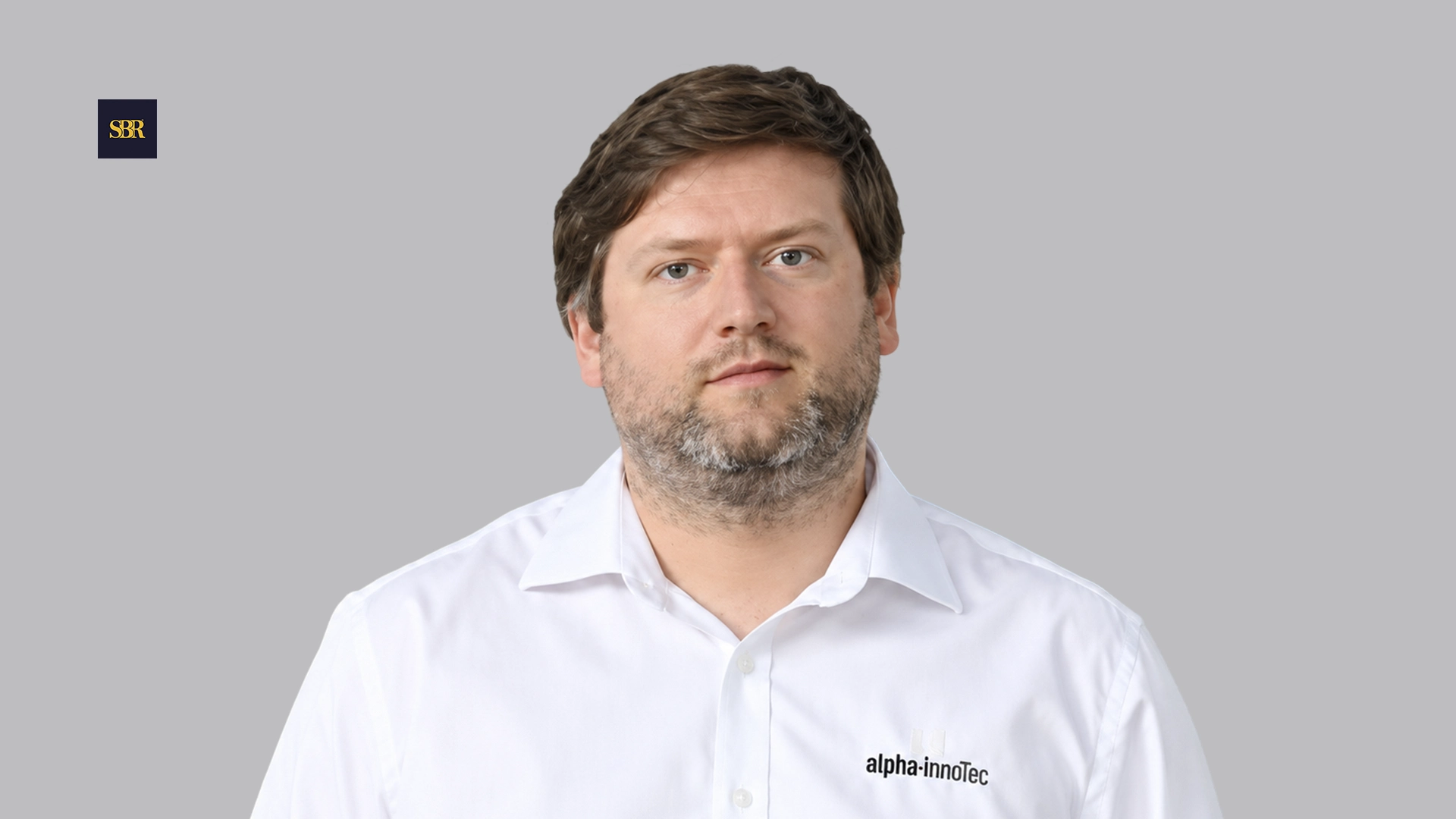
Alen Šapek is the founder and CEO of Additio d.o.o., a Slovenian company specializing in additive manufacturing, metallurgy, materials engineering, and industrial 3D printing. He holds a master’s degree in Metallurgy and Materials and has professional experience spanning metallurgy, materials engineering, additive manufacturing, and industrial product development.
Šapek began his career in metallurgy at Ravne steelworks, where he worked after completing his studies and gained practical industry experience. He entered additive manufacturing in 2018, with a particular interest in new materials and the industrial applications of 3D printing technologies. He went on to establish Additio, which provides additive manufacturing, rapid prototyping, metal casting, forgings, materials, and engineering services.
His work also includes research and knowledge-sharing in materials engineering and additive manufacturing. He has been identified as a materials-engineering specialist and lecturer, and he has co-authored published research in materials and manufacturing. A 2024 research paper lists Šapek as an author affiliated with Additio d.o.o.