For a long time, knowledge of what lies beneath the surface has come from drilling, seismic surveys, and indirect interpretation of surface data. These methods can work well, but they often depend on physical disturbance or limited sampling that leaves gaps in understanding.
A different method is now emerging that treats gravity itself as a source of measurable information. Instead of sending energy into the ground, it reads small changes in gravitational pull across locations and uses those differences to infer what lies below the surface.
Atomionics develops systems built on this principle using cold atom interferometry. The method uses lasers to cool atoms to extremely low temperatures so their motion becomes minimal. In that state, even very small shifts in gravity change how the atoms behave, and those changes can be measured with high sensitivity.
This turns gravity into a readable signal rather than a fixed background force. Underground features such as rock layers, cavities, and fluid zones each affect gravity in slightly different ways, and those differences can be detected through atomic measurement.
Atomic Measurement of Subsurface Structure
Cold atom interferometry works by making atoms behave like waves under controlled conditions. When atoms are cooled, split, and later recombined, they produce patterns that shift when gravity varies across space.
Those patterns reflect differences in underground density. Different materials below the surface produce different gravitational signatures, and those signatures can be recorded and processed into spatial models.
This allows subsurface mapping without drilling or seismic excitation. Instead of disturbing the ground, the system records how atoms respond to gravity and builds a model of what lies below.
This method can support early-stage exploration by identifying regions that may contain minerals or groundwater before physical sampling begins. It can also reduce unnecessary drilling by narrowing search zones.
The same measurement method can also track change over time. Shifts in underground density may signal movement in volcanic systems or stress changes along fault lines. Repeated measurements reveal patterns that single readings cannot show.
Positioning Without Satellite Signals
Modern navigation depends heavily on satellite systems. These systems work well in open areas but can weaken in tunnels, dense urban environments, or underwater locations where signals are blocked or distorted.
Gravity based positioning offers an alternative that does not rely on external signals. Every location on Earth has a slightly different gravity profile because of variations in underground mass. If those differences are measured with enough precision, they can be matched against reference maps to estimate location.
Cold atom systems make this possible because they can detect extremely small changes in gravity. When atoms are cooled with lasers, their behavior shifts in ways that reflect local gravitational variation. Those shifts can then be compared with stored data to estimate position.
This creates a positioning method based on physical measurement rather than transmitted signals. It can function in environments where satellite systems do not reach, such as underground structures or dense cities.
It also adds another layer to navigation systems by providing a reference based on Earth’s physical properties rather than external infrastructure.
Engineering Work Behind the System
Turning atomic physics into working instruments requires more than laboratory demonstrations. The system must remain stable in real environments where vibration, temperature change, and electrical noise can affect measurements.
Laser systems must control atoms with high precision. Mechanical components must reduce unwanted movement that can distort readings. Software must process interference patterns and separate useful signals from background variation.
Each part depends on the others. A change in hardware affects measurement results, which then affects how software interprets data. Progress depends on repeated testing and adjustment across all parts of the system.
Support from investors such as Wavemaker Partners, SGInnovate, Cap Vista, 500 Global, and Paspalis Capital shows long-term interest in technologies that require extended development cycles.
Singapore offers access to research facilities and engineering capability that support this type of work, where physics research connects directly with hardware systems.
A Different Way to Read Physical Space
Gravity-based sensing introduces another way to observe and measure space. Instead of relying only on light, radio waves, or seismic signals, it uses gravity and atomic behavior as sources of measurement.
This adds a second reference layer for mapping the Earth. Satellite systems provide one view, while gravity-based systems provide another based on underground structure. Together, they offer more complete information about location and subsurface features.
Subsurface structures, underground activity, and signal-blocked environments become easier to study through this method. Positioning systems also gain an additional reference source that does not depend on external signals.
The work suggests that gravity can be treated as a measurable field that carries information about structure. Atoms act as sensors for that field, turning physical space into something that can be measured with greater resolution than before.
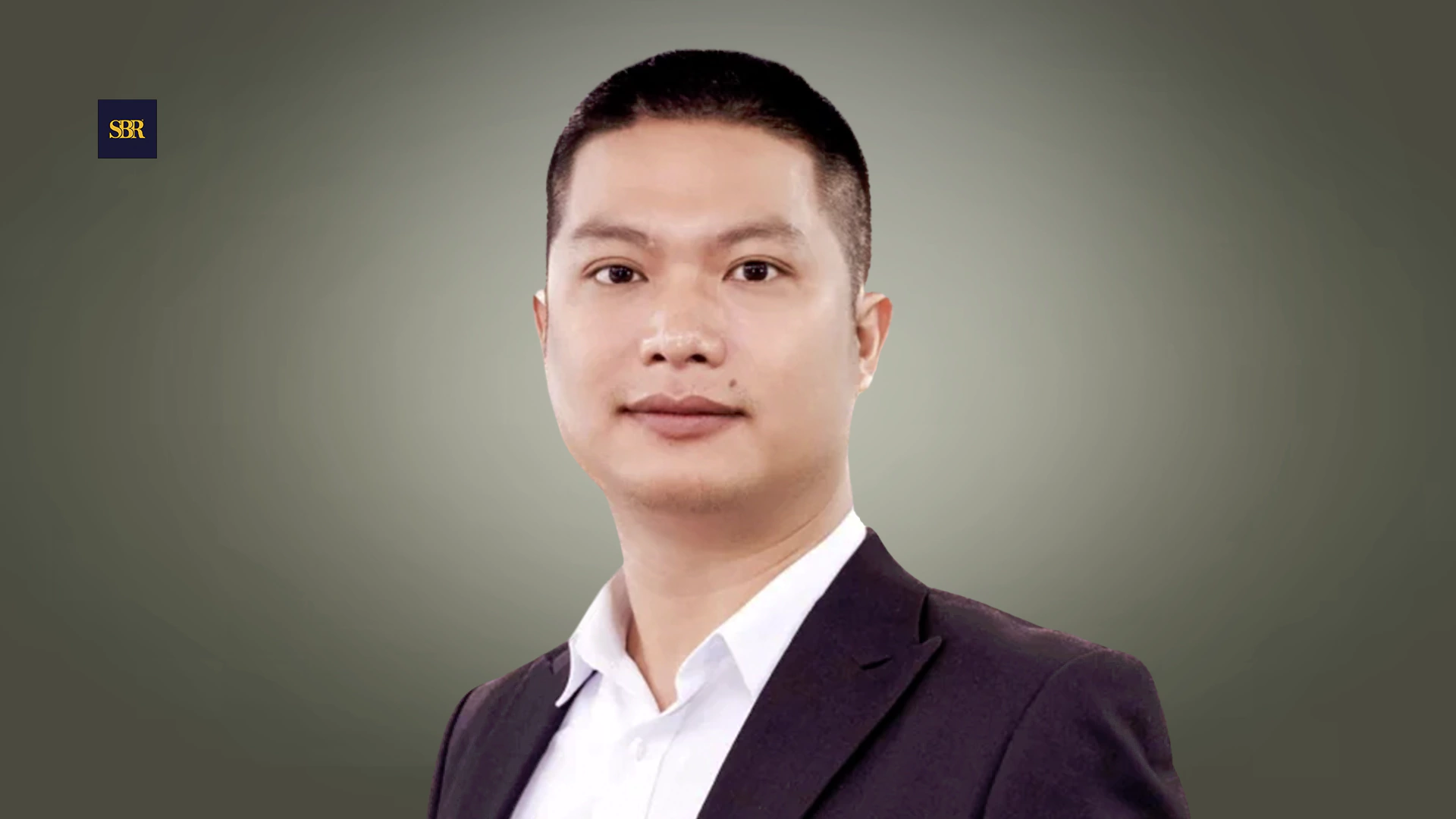
Sahil Tapiawala, Co-Founder & CEO, Atomionics











.webp)