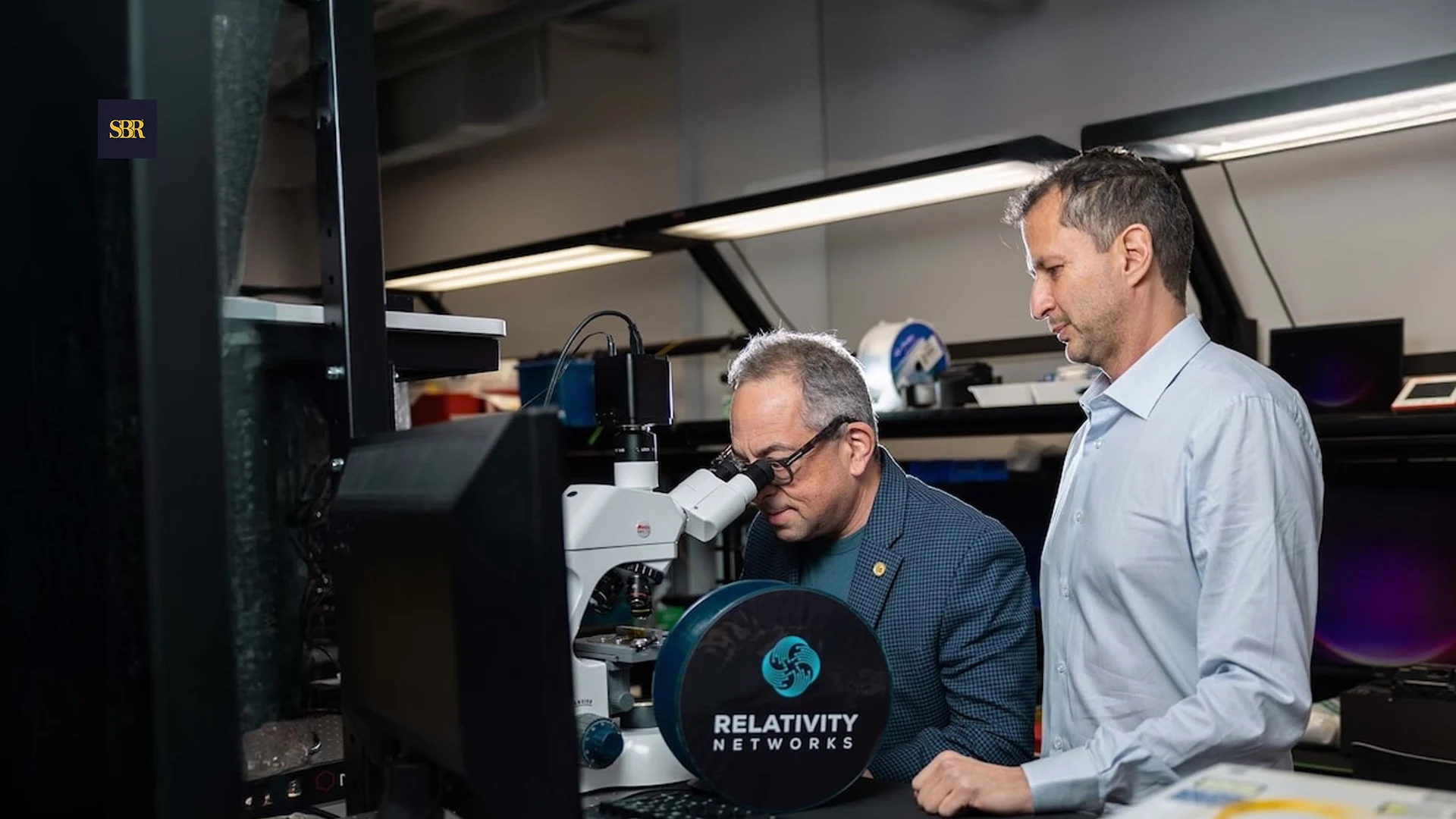
ORLANDO, Fla., August 19, 2026 — Data center developers are expected to spend as much as $4 trillion by the end of the decade, while political considerations and power availability are already limiting where large facilities can be built. Relativity Networks is targeting another factor in data center placement — fiber latency. The company announced $22 million in SAFE financing from Rhapsody Venture Partners, Bell Ventures Inc., Faster Than Glass LLC, and other investors. It also secured a $40 million follow-on order from a leading hyperscaler that has not been publicly identified. The financing comes as AI computing deployments spread across larger physical areas, creating greater demand for networking infrastructure that can connect geographically separated computing resources without adding significant latency.
Relativity Networks produces hollow-core fiber, which transmits light through a hollow chamber rather than conventional glass fiber. The design allows light to travel closer to its theoretical speed than it does through traditional fiber. The company says hollow-core fiber can transmit data about 50% faster than conventional fiber. CEO Jason Eichenholz estimates that a signal takes roughly five microseconds to travel one kilometer through conventional fiber, compared with about 3.5 microseconds through hollow-core fiber. While the difference is measured in microseconds, the accumulated latency becomes more significant as computing resources are spread across greater distances.
$22 Million Funding Backs Hollow-Core Fiber Technology
The $22 million SAFE note financing provides Relativity Networks with additional capital as it develops its hollow-core fiber technology and works with large-scale data center customers. SAFE, or Simple Agreement for Future Equity, is an investment instrument in which the investment can convert into equity when a company conducts a future priced financing. The funding was drawn by Rhapsody Venture Partners, Bell Ventures Inc., Faster Than Glass LLC, and other investors.
The company has also secured a $40 million follow-on order from a leading hyperscaler. The customer has not been named, but the order gives Relativity Networks a commercial engagement with a major cloud and computing operator. The combination of new financing and a hyperscaler order comes as data center operators seek ways to connect larger pools of computing capacity while dealing with constraints on power and available sites.

Faster Fiber Targets Latency Across Data Center Networks
Traditional fiber sends light through glass, while hollow-core fiber sends light through a hollow center. That difference allows the optical signal to travel closer to the speed of light. Relativity Networks estimates that the resulting transmission time can fall from roughly five microseconds per kilometer to 3.5 microseconds. Across long-distance connections between data center facilities, the reduction can provide additional room for geographically distributed computing without adding the same level of network latency.
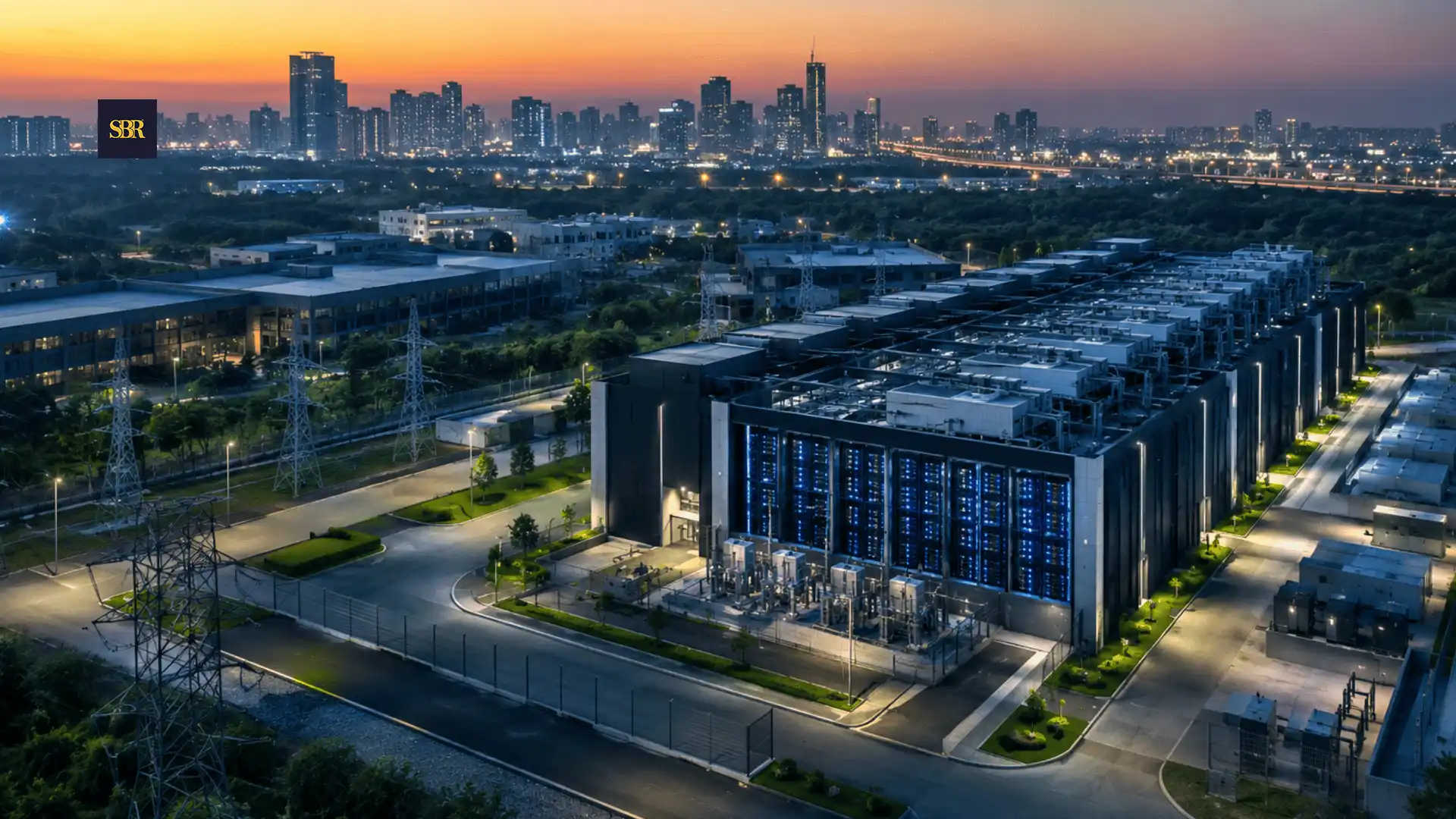
The significance becomes more apparent as AI systems require larger numbers of GPUs and more computing capacity. When AI compute was concentrated within a single GPU rack, the distance between computing components was relatively limited. Larger deployments can now extend across hundreds of acres and dozens of buildings within a data center campus. Hollow-core fiber gives operators another networking option when those physical distances become part of the computing equation.

Photo credit: Relativity Networks
Distributed AI Compute Creates Demand for Longer Connections
Relativity Networks sees particular potential in multi-campus deployments, where existing data centers can be connected so that computing resources operate as one synchronized system. Power availability is one reason operators may distribute computing capacity across multiple locations. Instead of placing all the required GPUs at a single site, developers can use facilities in locations where power and suitable infrastructure are already available.
That geographic distribution creates a networking requirement: computing resources separated by significant distances still need to exchange data rapidly enough to function as a coordinated system. Eichenholz describes this as a move toward placing computing capacity where power and existing infrastructure are available while maintaining synchronization between sites. Faster fiber can reduce the latency associated with those connections, giving operators greater flexibility when deciding how far apart individual computing facilities can be.
$40 Million Hyperscaler Order Adds Commercial Momentum
The $40 million follow-on order from an unnamed hyperscaler provides a significant commercial engagement for Relativity Networks as the company develops its hollow-core fiber technology for large-scale computing infrastructure. The order comes alongside the $22 million SAFE financing and reflects interest in networking technologies designed for AI systems that operate across larger physical footprints.
Eichenholz describes the development of AI infrastructure in three stages. The first centered on increasing computing capacity through GPUs. The second involved networking within data centers to make better use of that computing capacity. The next stage, in his view, will involve the geography of computing itself. By reducing transmission latency, hollow-core fiber could allow data center operators to place computing resources farther apart while maintaining the synchronization required by large AI workloads. As developers seek locations with sufficient power and existing infrastructure, the distance between computing facilities is becoming another factor in how large-scale AI infrastructure is designed.
Relativity Networks produces hollow-core fiber, which transmits light through a hollow chamber rather than conventional glass fiber. The design allows light to travel closer to its theoretical speed than it does through traditional fiber.












.webp)