By Andrew Pylypchuk, Global Director of Business Development for Agriculture, EarthDaily
VANCOUVER, Feb. 5, 2026 — For decades, agriculture’s success was defined in output. Higher yields, heavier inputs, and expanding supply were markers of progress. For a long time, that model delivered.
The pressure now looks different. Demand continues to rise, with hundreds of millions more people to feed over the next decade, but production has become harder to rely on. Weather volatility is increasing. Land and water resources are under strain. Supply chains face more frequent disruptions. And the financial exposure tied to these pressures, from input costs to credit risk to market swings, has grown sharply.
Outcomes now hinge not simply on how much can be produced, but on whether decisions hold up under unpredictable, often compounding conditions. In that sense, agriculture’s defining challenge has shifted from maximizing production to managing execution under risk, ensuring that every step, from planning to intervention to monitoring, performs reliably when conditions do not.
Why Continuous Observation Has Become Foundational
Many of the pressures agriculture faces don’t arrive as shocks. Recent FAO analysis points to a simple pattern: pressure in agriculture builds over time. Input intensity, water stress, and land degradation rarely show up in a single season, and they’re easy to miss when observation resets each year. But when conditions are tracked consistently, they begin to influence decisions long before results are locked in.
That reality has changed how Earth observation is used in agriculture. What once served as a periodic input is now expected to act more like infrastructure, running continuously in the background and capturing how conditions evolve rather than how they appear at a single moment.
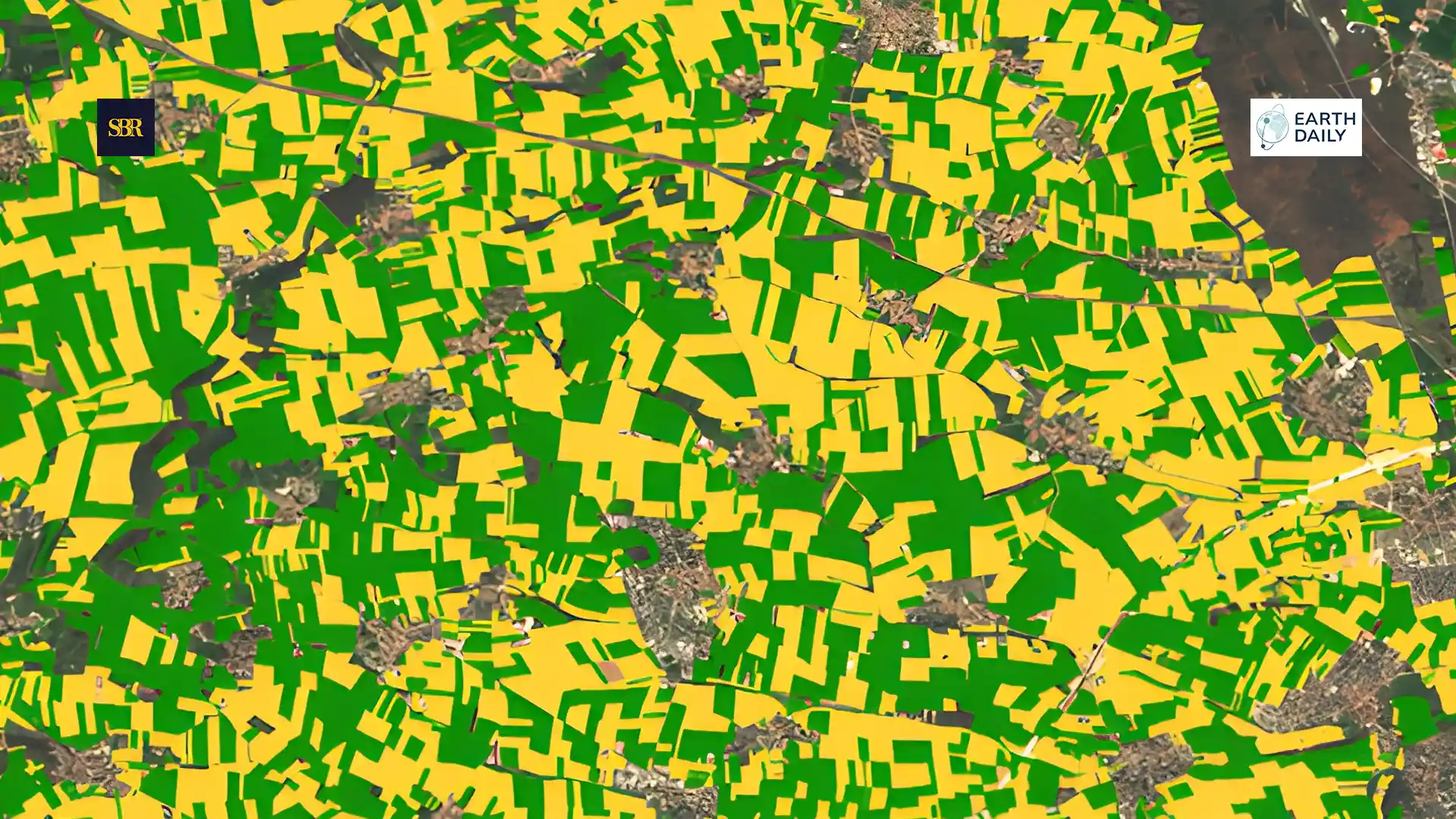
Agricultural intelligence is built upon that principle. By observing the same agricultural areas every day, we generate a continuous, consistent record of each individual field and its surrounding regions. Instead of restarting the story each season or relying on narrow snapshots, we capture how conditions evolve over time creating a stable foundation for timely, reliable decisions.

From tracking global production trends to monitoring crop conditions and assessing risk, EarthDaily’s Agriculture solutions provide near real-time satellite intelligence to support agriculture markets, insurance, and digital farming.
Consistency is what makes long-term measurement meaningful, turning it into an early warning. With a continuous record, the questions shift from observing what happened to understanding where production is at risk. Real, on the ground changes separate from noise in the data. Emerging stress becomes visible before yields fall. And patterns over time reveal whether a poor season is an anomaly or an early signal of deeper, structural risk.
Execution Under Pressure
The execution challenge extends well beyond production. As the FAO’s State of Food and Agriculture highlights, pressure on land and water is intensifying, and agrifood systems are increasingly vulnerable to shocks and stresses that expose weakness long before harvest.
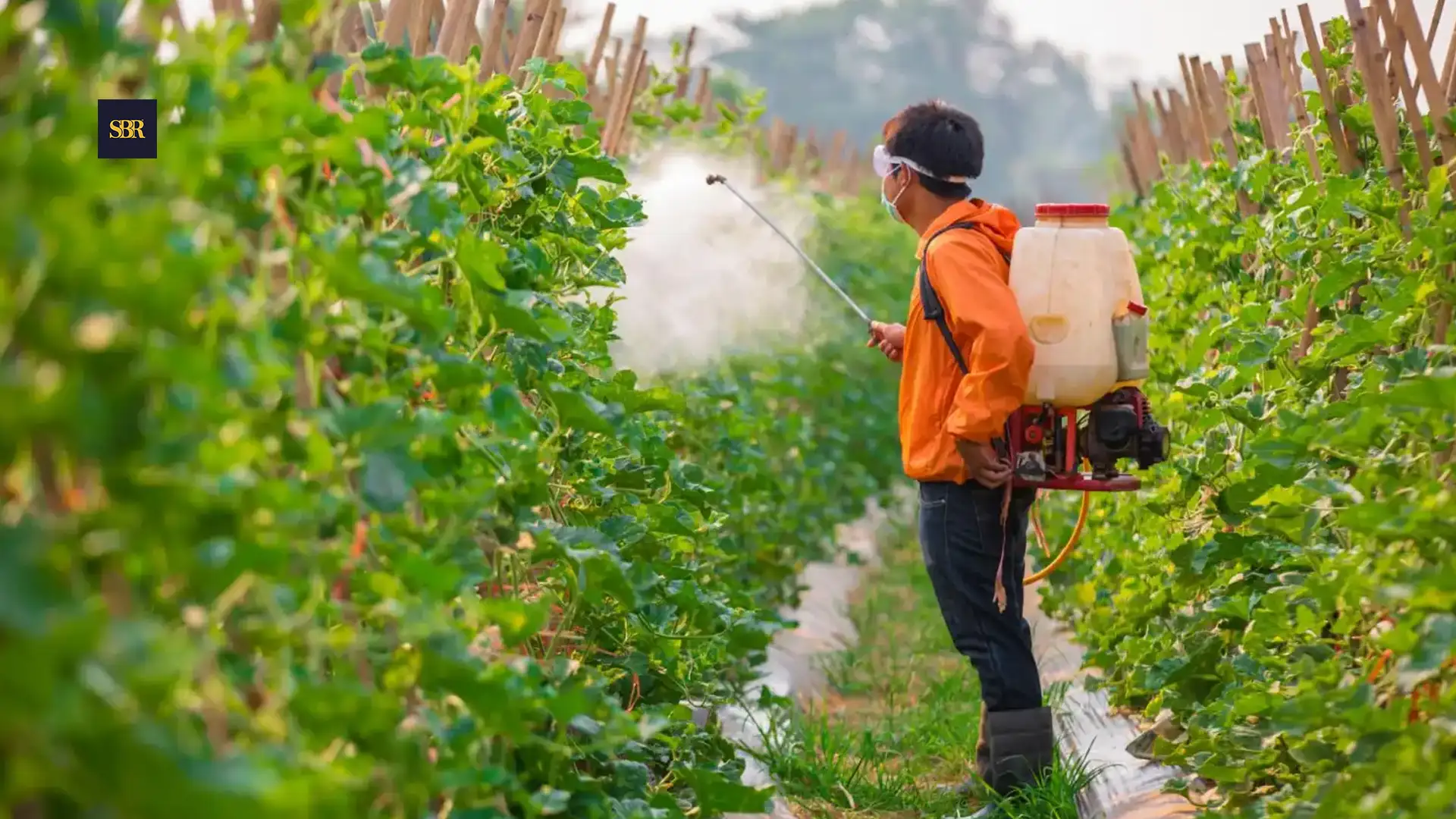
Losses are part of that story. A significant share of global food never reaches retail, not because of a single point of failure, but because small execution failures accumulate across the season: poor water management, delayed interventions, fragmented monitoring, and inconsistent follow through at each stage. In systems already strained by resource pressure and climate variability, these breakdowns compound quickly. The result is an environment where execution and not production is the decisive factor in protecting yield potential, safeguarding supply, and managing risk across global value chains.
The financial impact shows up early. Lenders and insurers have already moved beyond spot checks because they do not scale across large portfolios or volatile conditions. They rely instead on records that can be compared across regions and across years, giving them a defensible view of exposure and risk.
Commodity traders and originators rely on the same continuity. Early signals on acreage, emergence and vegetative strength reveal supply risk long before it is reflected in prices, helping position ahead of structural shifts, not react after the fact.
Agribusinesses face a similar imperative. They need to plan further ahead, manage uncertainty earlier, and act faster within each season, while also navigating shrinking labor pools and increasingly vast territories to monitor. Without consistent, comparable data, the gap between what they must see and what they can see grows wider each year.
Across these roles, decisions depend on a stable point of reference, early visibility into change, and confidence that what is being observed reflects real conditions rather than noise.
Turning Observation into Action
Observation on its own does not close the execution gap. Data begins to matter when it informs decisions, and that depends on the stability of what sits underneath.
Analytics and AI rely on continuity. Models surface stress, yield shifts, or degradation by learning from existing records. Without a stable historical baseline, AI has no reliable reference for what “normal” looks like, making it far more likely to misinterpret early-season signals or miss emerging risk entirely. When analytics and AI are built from a long, stable observational record, they can distinguish meaningful change from normal variability, turning algorithms from guesswork into decision support.
Analytics are built on long, stable observation records so patterns can be evaluated across seasons rather than inferred after the fact. Consistent measurement allows change to be identified as it develops, not reconstructed once outcomes are already fixed. Only data driven decisions made early and accurately can keep execution ahead of risk.

A fully automated workflow in EarthDaily Territory Insights translates satellite data into field-level crop growth stages, in-season potential and key milestones. The inset shows corn tasseling detection (VT-R1) based on daily crop growth monitoring and GDD tracking.
Building Decision Infrastructure for Modern Agriculture
Agriculture once operated at the field level, managing variability plot by plot when decisions were local and conditions were relatively contained. But agriculture no longer functions in isolation. Today, the forces shaping outcomes, weather variability, water constraints, shifting trade patterns, operate at a regional and global scale. These pressures can be missed without the decision support leading to mispriced risk, exposure and unnecessary losses. What can be influenced is how clearly those pressures are observed and understood.
Context is now the key; Earth observation extends precision beyond individual fields by placing them within a consistent regional picture. Patterns that are easy to miss on the ground – delayed emergence, uneven growth, moisture stress – all become visible only when measured against a broader, long-term baseline. That distinction determines whether a signal is treated as short term volatility or evidence of something structural taking shape.
As external pressures intensify, the lever that operators can control is clarity. How early, how consistently, and how accurately change is observed and understood. Earth observation provides the long view. Analytics and AI interpret those signals. Field expertise keeps the insight grounded. Together, they form the decision infrastructure needed for execution to hold up as conditions shift.
The upcoming EarthDaily Constellation is built around this need, with daily global revisit and measurement consistency intended to support dependable monitoring season after season. The focus is on delivering reliable, comparable insights that align with how agricultural systems actually evolve, not in snapshots, but in continuous motion.
As execution becomes agriculture’s defining challenge, building decision infrastructure with the ability to detect meaningful change early, consistently and enabling action before risk materializes is becoming as essential as production itself. Across markets, risk, and operations, the producers and organizations that thrive will be those whose execution is grounded in clear, continuous, data driven insight.
Observation on its own does not close the execution gap. Data begins to matter when it informs decisions, and that depends on the stability of what sits underneath.
About Andrew Pylypchuk
Andrew Pylypchuk leads agricultural business development at EarthDaily, where he works on applying Earth observation data to real-world agricultural decision-making across markets, risk, and climate-driven systems.





.webp)