KFAR SABA, Israel, July 27, 2026 — Multiple robotics companies are working on foundation systems that can execute tasks they were never explicitly trained to handle. Their methods include studying millions of videos from the web, running computer simulations, and collecting motion data from humans performing tasks while wearing sensor-equipped gloves. Enigma, a research lab that is less than a year old and is emerging from stealth, is pursuing a different line of research by studying how humans interact with robots. The company believes these interactions could lead to intuitive interfaces and potentially a different kind of robotic intelligence. To fund its work, Enigma has raised a $71 million seed round led by Index Ventures and Ribbit Capital, with participation from Sarah Guo of Conviction Partners. The funding will support the startup as it investigates how people communicate with machines and what those interactions can reveal about robotic systems.
Enigma is launching a large-scale public experiment in which people around the world can interact online with more than 100 of its proprietary AI robots. The machines are housed in hangars in Israel and California and can perform tasks including drawing pictures with a paintbrush, fighting each other with swords, and conducting simple chemistry experiments by picking up and mixing flasks containing liquids. Enigma says it developed both the robotic arms and the underlying AI systems entirely from the ground up. The experiment will allow the company to test different ways for people to communicate with its robots. Jacobi said Enigma wants to determine whether people would prefer to communicate through text or audio, demonstrate an action through video, or use methods such as tapping, dragging, and dropping. The company does not yet know which form of interaction will work best, making the public experiment an open-ended effort to study how humans want to communicate with machines.
Founders Bring Cybersecurity Backgrounds to Robotics
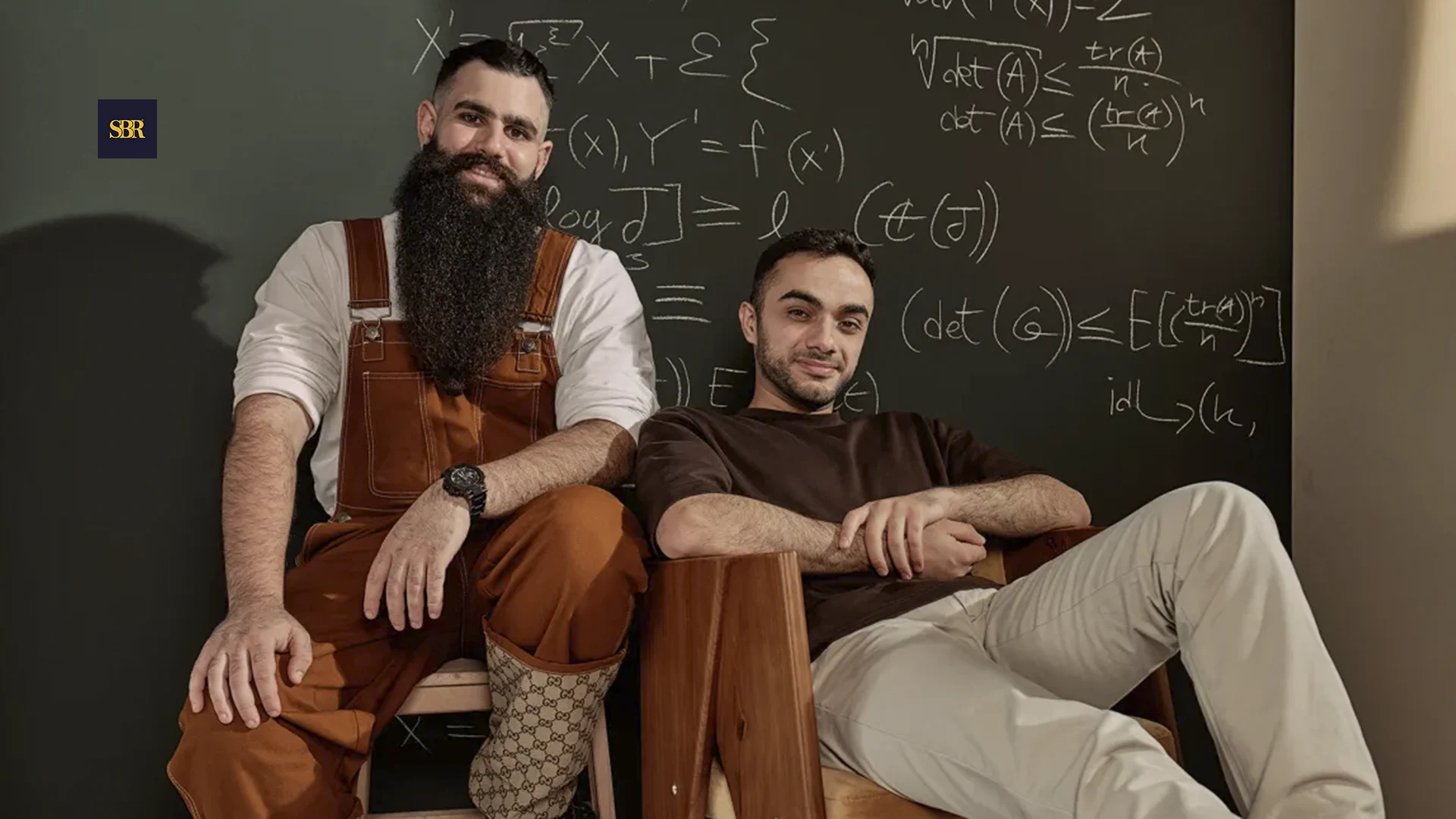
Jonathan Jacobi and Gal Niv co-founded Enigma after years of friendship that began when they met as young teenagers while competing in hacking competitions. The two later served together in Israel’s elite Unit 8200, where they conducted cybersecurity research. Jacobi was recruited by Wiz founder Assaf Rappaport during his time at Microsoft and became the company’s youngest-ever employee. When Jacobi and Niv decided to start a company together last year, they chose AI for robotics despite not having direct experience in the field. They believed robotics presented some of the most exciting unsolved problems in technology and decided to apply their technical backgrounds to the sector. The founders then assembled a group of people from Israel’s technology ecosystem and community, including alumni from top AI labs, mathematics Olympiad winners and people who were persuaded to leave PhD programmes.
Shardul Shah, a partner at Index Ventures, said Jacobi and Niv’s lack of experience as robotics specialists gives them room to pursue original ideas. He contrasted their starting point with that of robotics industry insiders who may begin with capabilities such as teleoperation or dexterity. Enigma, he said, is starting by considering the ultimate user experience. Jacobi told TechCrunch that the company wants human-robot interactions to become effortless. He used the example of doing the dishes: if a person has to spend 15 minutes explaining to a robot where everything should go, the person may decide it is easier to do the task themselves. Jacobi said this is currently the situation even with highly capable AI systems. He compared the desired experience with adjusting a car’s volume knob, where a person can turn the control until the volume feels right. Having to adjust volume by specific percentages without knowing whether the result will be too loud or too quiet would be frustrating, and Jacobi believes robotic interaction should eventually feel similarly intuitive.

Public Experiment Will Test Different Interfaces
Enigma will use data from the online experiment to study how people want to communicate with robots and identify effective ways to train its foundational AI system. The startup will test different ways for people to communicate with its robots and observe how users interact with them. Text and audio are among the options under consideration, while other possibilities include showing a robot an example through video or using an interface based on tapping, dragging, and dropping. Jacobi said the company expects to learn more about the right way to interact with robots through the experiment. The test is deliberately open-ended because Enigma does not yet know which communication method people will prefer. Instead of selecting a single interface in advance, the startup plans to use interactions with its robots to understand what users want from robotic systems.
The information gathered through those interactions could also affect how Enigma trains its foundational AI system. Jacobi acknowledged that the experiment could lead to better interfaces, but he also said the company hopes human-robot interaction data can reveal better ways to train its AI system. The company’s research therefore covers both the interface through which people communicate with machines and the underlying AI technology that enables the robots to perform tasks. Enigma is testing whether people want to communicate with robots through language, demonstrations, or direct digital interaction, while also examining what those preferences could mean for robotic intelligence. The company has not identified which interface it will ultimately prefer, while Jacobi described the experiment as very open-ended.

Image credit: Enigma
Commercial Use Cases Remain Undisclosed
Enigma’s specific business use cases have not been disclosed. Jacobi declined to share details about how the company plans to apply its AI, although he said Enigma is already partnering with companies in healthcare, logistics, and entertainment. Those partnerships provide the startup with commercial relationships while its research into human-robot interaction is still developing. Beyond those three sectors, Enigma has not publicly identified specific industries, customers or applications for its technology in the supplied information. The company’s public experiment is therefore currently the most visible demonstration of its research direction, giving people around the world access to more than 100 AI robots located in Israel and California.
The $71 million seed round gives Enigma funding to pursue its research after less than a year of development. Index Ventures and Ribbit Capital led the financing, with Sarah Guo of Conviction Partners also participating. Jacobi and Niv are approaching robotics from backgrounds in cybersecurity and technical research rather than from conventional robotics careers, and they have recruited researchers from AI labs, mathematics competitions and academic programmes to work with them. Their public experiment is intended to help determine how people want to communicate with robots and whether those interactions can inform the development of Enigma’s AI system. For now, the startup has left the eventual interface and specific business applications open, while its work in healthcare, logistics and entertainment provides early indications of where its technology could eventually be used.
Enigma is developing AI-powered robots designed to make human-machine interaction more intuitive.














.webp)