REDMOND, Wash., Oct. 25, 2025 — With its core philosophy of generating harmless food, AgriTech startup Aigen is building a future with no harmful chemicals in food.
Aigen founders Richard Wurden and Kenny Lee have both experienced the impacts of chemicals on human health first hand and live with diseases linked to pesticide use. This became the foundation for the launch of the world’s first AI-driven, network-connected robotic service, powered entirely by the elements.
With roots in farming, electric vehicles, robotics, and impact investing, Rich and Kenny founded Aigen in 2020 to connect farmers to breakthrough technologies and decarbonize agriculture. It believes in a future where farmers prosper, people thrive, and the planet flourishes.
Among this Seattle-based startup’s most innovative products is a robotic device that does weeding. It is being touted as a novel innovation to tackle the problem of weeds growing uncontrollably. The robotic solution named Element is proving to be of huge benefit for farmers.
Besides the convenience that it offers to farmers, the robotic farm equipment is a scientific replacement for chemical exposure to food, especially when weeds grow resistant to herbicides.
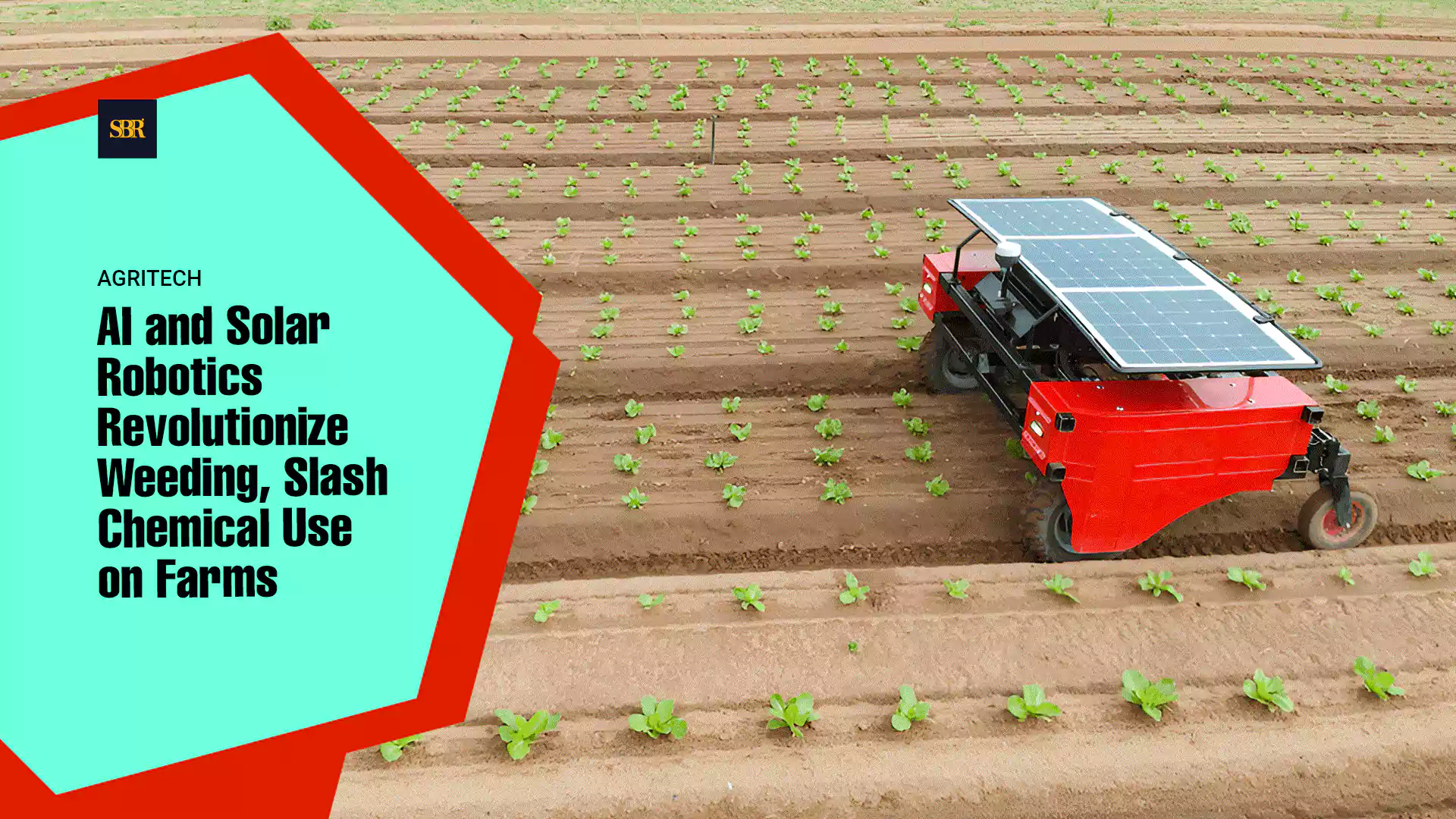
Aigen’s wheeled robot is a solar-based device and comes along with artificial intelligence that diligently combs fields, plucking out weeds.
The multiple benefits of this innovation include its cost-effectiveness and being eco-friendly.
“I really believe this is the biggest thing we can do to improve human health,” said Richard Wurden, Co-founder and Chief Technology Officer of Aigen.
A mechanical engineer by qualification, Wurden worked at Tesla for five years and started conceptualizing the robot after relatives who farm in Minnesota told him weeding was a costly affair.
In the absence of a sufficient labor workforce, the use of chemicals is usually the only viable option, as weeds are becoming immune to herbicides, says Wurden.
Know More About the Robot’s Functionality
In terms of design, the robot Element resembles a large table on wheels, with solar panels on top. Metal arms equipped with small blades reach down to hoe between crop plants.
“After the sunset, it just powers down and goes to sleep. Next morning it comes back up and starts going again,” Aigen Co-founder and Chief Executive Kenny Lee told AFP.
Cameras fitted in the robot help the AI system capture data, which facilitates becoming a guiding path towards rows of crops and subsequently helps to identify weeds.
“To even think that this is a job that we want humans doing is a mistake. Spending a few hours in the field weeding makes one realise how cumbersome it is,” Wurden said.
Aigen is designed keeping in mind the workers who brave hot weather conditions while weeding. One more objective of the innovation is to enhance the skills of workers to monitor and troubleshoot robots.
Besides the on-board AI, robots maintain wireless communication with small control centers, notifying handlers of mishaps.
As crop diversification is becoming popular in the US, Aigen’s robots are operating in tomato, cotton, and sugar beet fields and are projecting the technology’s ability to weed without damaging the crops. It takes about five robots to weed 160 acres (65 hectares) of farm, informed Lee.

How is Aigen Gaining Popularity Globally
Suited for Crop Management: The robotic device by Aigen has caused curiosity among farmers globally, who also face the issue of weeds. In many cases, field owners in some countries resort to the burning of crop stubble, which causes massive air pollution.
Aigen was selected for Amazon Web Services' 'Compute for Climate' fellowship program, which provides AI tools, data center power, and technical help for startups tackling environmental woes.
The robot is conceptualized and designed by the startup, which has an employee strength of 25 people and is based in the city of Redmond, outside Seattle. The device is reportedly priced at $50,000.
Farmer-Friendly Technology: As per experts, a challenging task for Aigen is to remain focused on winning over politically conservative farmers with a climate-friendly option that operates on solar power instead of costly diesel fuel.
“The term Climate has become politicized but when you get really down to the core of the issue, farmers care about their land,” Lee told AFP.
The farmer-friendly technology has amazed senior techies at Amazon Web Services (AWS), the e-commerce giant’s cloud computing unit.
“Aigen is going to be one of the industry game changers in the future,” AWS Head of Climate Tech Startups Business Development Lisbeth Kaufman told AFP.
AI in Agriculture: According to the market research report “Artificial Intelligence in Agriculture Market by Technology”, published by MarketsandMarkets, the artificial intelligence in agriculture market is estimated to reach $4.0 billion by 2026, at a CAGR of 25.5 percent between 2020 and 2026.
The market growth is fuelled by data generation through sensors and aerial imagery used to observe crops, which are being widely embraced. This increases crop productivity through deep-learning technology and enhances government support for the adoption of modern agricultural techniques.
Agriculture-dependent nations in Asia Pacific are expected to witness the highest growth of AI in the farm sector. The wide-scale adoption of AI technologies in agricultural fields is the key factor supporting the growth of the market in this region.
AI is increasingly being applied in the agriculture sector in developing countries such as India and China. The increasing adoption of deep learning and computer vision algorithms for agriculture applications is also expected to fuel the growth of the AI in agriculture market in the Asia Pacific region.
After the sunset, it just powers down and goes to sleep. Next morning it comes back up and starts going again.