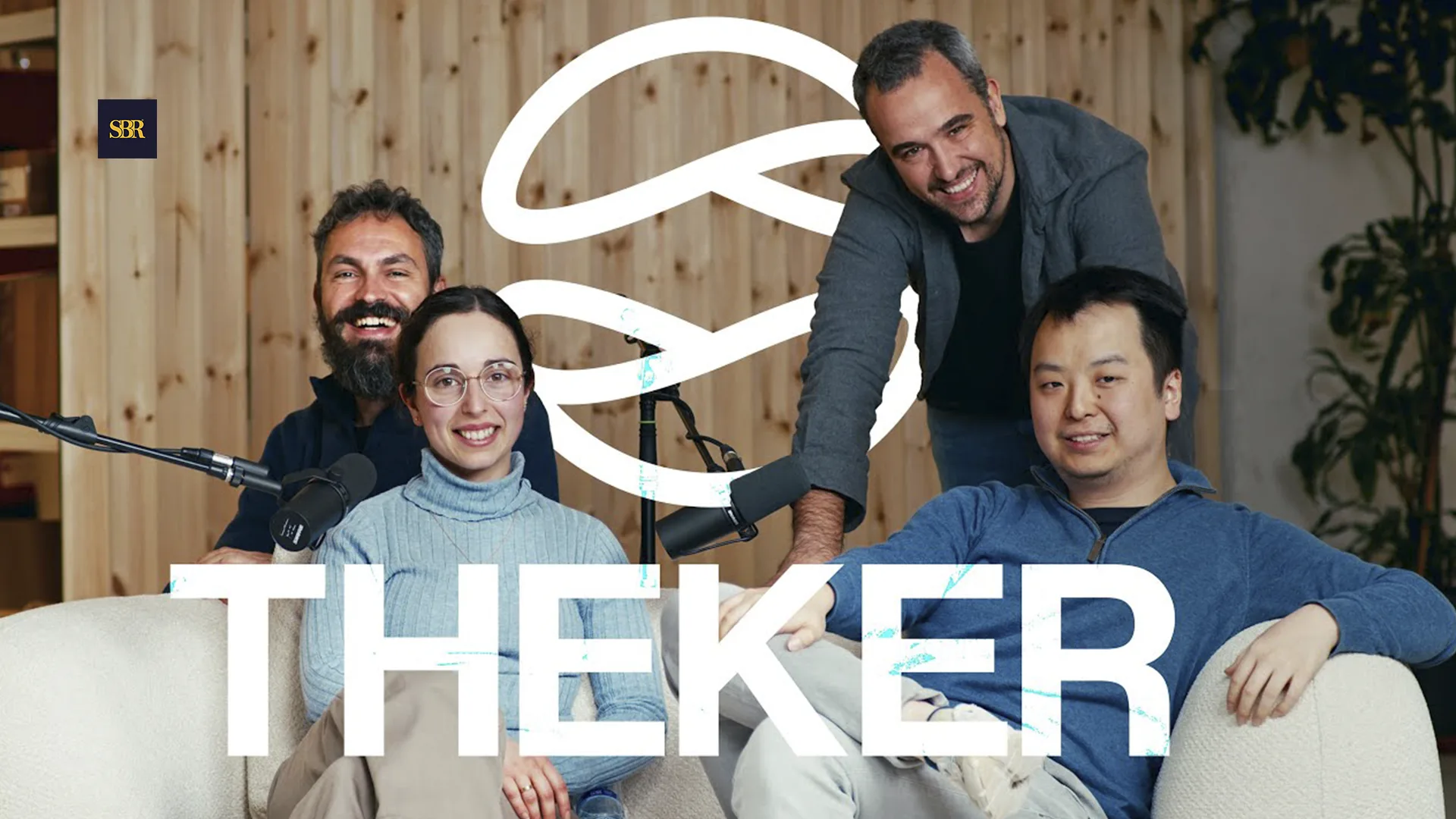
BARCELONA, Spain, June 13, 2026 — For decades, industrial robotics has been built around specialization. One robot welds. Another sorts. A third packs boxes. Each machine is optimized for a narrow function, delivering efficiency at scale but struggling whenever production requirements change.
Barcelona-based startup THEKER believes that model is becoming obsolete. The company has raised $85 million in what it describes as Europe's largest robotics Series A funding round, attracting backing from investors including CRV, Samsung, and Aglaé Ventures, the investment vehicle associated with luxury goods billionaire Bernard Arnault. The funding signals growing investor appetite for a new generation of robotics companies focused not on single-purpose automation, but on adaptable machines that can move across tasks and industries.
Moving Beyond the One-Task Robot
Traditional factory robots thrive in predictable environments. If a machine performs the same motion thousands of times a day, automation works remarkably well. The challenge arises when workflows become more variable. Factories, warehouses, and distribution centers rarely operate under perfectly uniform conditions. Product lines change. Packaging formats evolve. Consumer demand shifts. These realities create tasks that often remain dependent on human labor because programming dedicated robots for every variation becomes expensive and impractical.
THEKER’s answer is a modular robotics platform designed to be reconfigured rather than replaced. Instead of building a robot around a fixed physical structure, the company develops machines whose arms, hands, and overall form can be altered depending on the job at hand. A robot sorting parcels today could be adapted to handle apparel packaging or beverage logistics tomorrow. That flexibility places THEKER in a different category from many of the humanoid robotics startups attracting attention across the technology sector.

The Race for General-Purpose Automation
The robotics industry has spent the last several years pursuing what many describe as the next frontier of automation. Inspired by the success of large language models, companies are attempting to create “general-purpose” robots capable of performing a broad range of physical tasks rather than excelling at just one. The vision mirrors what foundation models accomplished in artificial intelligence. Instead of building separate software systems for individual functions, developers created models that could be adapted to countless applications from a common foundation.
THEKER appears to be applying a similar philosophy to industrial robotics. Rather than designing a humanoid worker intended to mimic human movement, the company is focusing on adaptability within industrial environments. Its founders argue that real-world manufacturing and logistics operations require machines that can handle diverse workflows without demanding an entirely new robotic installation every time a process changes. If successful, the company could help bridge the gap between highly specialized industrial machines and the long-promised vision of flexible automation that can evolve alongside business needs.
Why Investors are Paying Attention
The startup’s rapid rise reflects broader trends shaping global manufacturing. Labor shortages continue to challenge industrial operators across developed economies. At the same time, businesses face growing demands for faster fulfillment, greater customization, and more resilient supply chains. These conditions create strong incentives to automate tasks that previously depended on large workforces while maintaining the flexibility to adapt as operational requirements shift.
THEKER has already attracted support from major industrial players. Early backing from Inditex, the parent company of Zara, suggests significant interest from large-scale retail and logistics operators. The company also says it intends to expand beyond retail into more demanding manufacturing environments where manual processes remain difficult to automate. For investors, the appeal is straightforward. A robot that can serve multiple industries potentially represents a far larger market than one designed for a single niche, opening the door to widespread adoption across global supply chains.
The Real Test Lies Ahead
Raising capital is one thing. Delivering large-scale deployment is another. The robotics sector has produced numerous well-funded startups that struggled when transitioning from demonstrations to real-world operations. Building hardware, integrating software, and maintaining reliability across diverse environments remains significantly more difficult than developing digital products. The challenges multiply when machines are expected to perform a variety of tasks rather than a single highly controlled function.
THEKER’s strategy reflects an awareness of that reality. The company focuses directly on operations and logistics decision-makers rather than innovation programs or pilot projects. The goal is to secure production deployments instead of experimental trials. Whether that strategy succeeds will determine whether THEKER becomes a major industrial automation company or simply another well-funded robotics experiment struggling to translate ambition into commercial scale.
The Rise of Flexible Automation
The significance of THEKER’s funding round extends beyond one startup. It highlights a shift in how investors and manufacturers increasingly think about automation. The next generation of industrial robots may not be defined by specialization, but by versatility. Companies are searching for machines capable of adapting to changing environments in much the same way software systems have become adaptable through advances in artificial intelligence.
If THEKER can translate that vision into dependable factory deployments, it could help redefine how automation is implemented across the global industry. The company's $85 million raise is ultimately a wager that the future belongs not to robots that do one thing exceptionally well, but to robots capable of doing many things well enough to transform entire industries. Whether that vision becomes reality remains to be seen, but the scale of investor confidence suggests that the race toward flexible, general-purpose robotics is only just beginning.
THEKER has already attracted support from major industrial players. Early backing from Inditex, the parent company of Zara, suggests significant interest from large-scale retail and logistics operators.



ft.webp)
FT.webp)

ft.webp)
FT.webp)
 ft...webp)
 sme.webp)