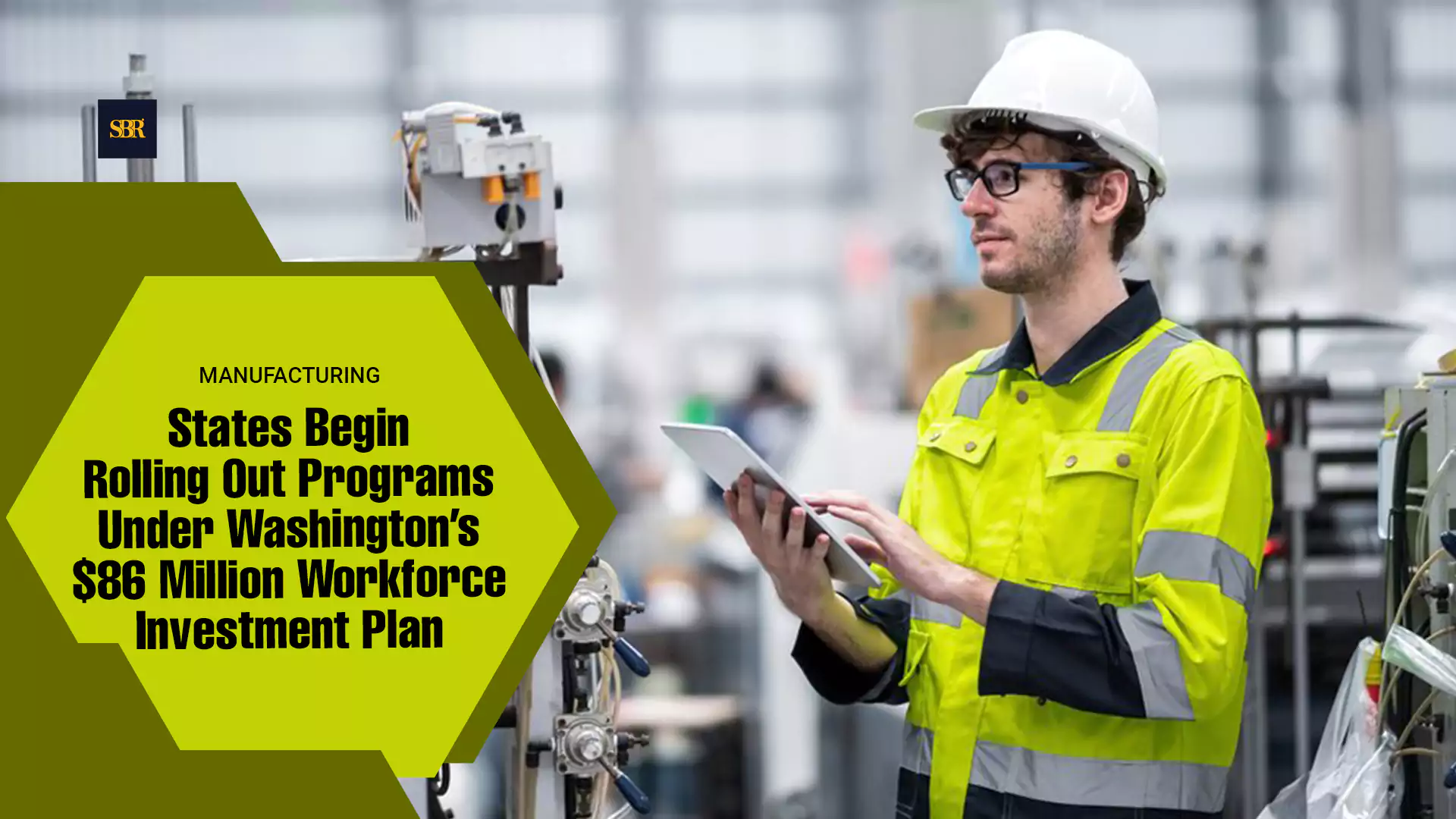
WASHINGTON, Nov. 3, 2025 — The US Department of Labor has announced $86 million in new federal grants to expand workforce training across 14 states, marking one of the most significant steps this year in the effort to rebuild America’s skilled labor base. The funding, unveiled on September 30, is part of the Industry-Driven Skills Training Fund, a program that supports industries vital to the country’s economic and strategic strength, such as advanced manufacturing, shipbuilding, clean energy, and emerging technologies.
For years, federal efforts have focused heavily on attracting factories and investment. This latest round of funding shifts attention to the people who make those projects work, such as welders, machinists, technicians, and engineers. The goal is to rebuild the skills pipeline needed to sustain the industrial growth now unfolding across the United States.
Targeting Industries that Matter Most
The Department of Labor said the grants will support programs tailored to local industries, ensuring that training translates directly into jobs. More than $20 million of the total is dedicated to shipbuilding and marine manufacturing, a sector that plays a crucial role in both commerce and national defense.
States including Idaho, Maine, Michigan, Tennessee, Texas, Louisiana, and Connecticut are among the recipients. Each will use the funds to strengthen regional training systems, develop apprenticeships, and equip workers with the technical knowledge needed for next-generation production.
Idaho received $8 million to train workers in advanced manufacturing, mineral production, and nuclear energy, positioning itself as a hub for clean energy innovation. Michigan, another $8 million recipient, will channel funding into maritime manufacturing, helping rebuild expertise in shipbuilding and marine systems. Other states plan to expand workforce programs for semiconductor fabrication, energy storage, and precision manufacturing.
Closing the Skill Gap: The funding comes as US manufacturers face mounting pressure to fill critical positions. According to the Manufacturing Institute, the country could face a shortage of 3.8 million skilled workers by 2033, driven by retirements, technological shifts, and the rapid expansion of high-tech production.
These new grants aim to close that gap by building flexible training networks that connect employers, colleges, and workforce agencies. States will be allowed to adapt the funds for equipment, updated curricula, and paid apprenticeships, but will need to show measurable results in employment and skill outcomes.
The Labor Department described the initiative as part of a long-term national workforce strategy, ensuring that federal investments in infrastructure and manufacturing translate into lasting career opportunities.
Building From the Ground Up: The $86 million investment complements other major legislation reshaping the industrial landscape, including the CHIPS and Science Act and the Inflation Reduction Act. While those measures have drawn billions in private investment for semiconductor and clean energy production, the new funding recognizes that physical infrastructure alone is not enough.
Factories may be rising across the Midwest and South, but without skilled hands to run them, production cannot keep pace. The department’s approach marks a significant shift, moving beyond incentives for machines and materials to investment in people and knowledge.
In states such as Tennessee and Texas, where electric vehicle and battery manufacturing is expanding, the funds will help local training programs keep up with demand. Coastal states such as Maine and Louisiana will focus on reviving maritime skills central to their regional economies.

Investing in People, Not Just Production
This funding round may not carry the headline numbers of large industrial subsidies, but its impact could prove just as profound. The strength of America’s manufacturing revival depends on the workforce that supports it. By investing in skills, Washington is signaling a belief that the next era of growth must be powered by knowledge as much as technology.
Officials have indicated that additional funding rounds will follow in 2026, rewarding states that show measurable success in creating and sustaining jobs. The initiative also encourages regional partnerships between technical colleges, industry groups, and local employers to ensure training stays aligned with evolving industrial needs.
For workers, the program represents more than an opportunity; it’s a path to stability and purpose in an economy rapidly reshaped by automation and clean technology.
A Workforce Built for the Future
Across America, new factories are taking shape, supply chains are being reshored, and industries once considered fading are showing new life. The federal government’s latest investment is designed to make sure that progress continues, not just through machines and materials, but through the people who give them purpose.
In the end, rebuilding America’s skilled workforce is not only an economic project. It is a generational one, aimed at restoring pride, expertise, and opportunity in the industries that built the nation in the first place.
By focusing on skills instead of subsidies, Washington is putting people at the center of America’s manufacturing revival.