
Soctera is an Ithaca-based semiconductor startup developing radio-frequency (RF) power amplifiers for radar, electronic warfare, satellite communications and telecommunications systems. These components strengthen radio signals transmitted by electronic equipment. Soctera uses gallium nitride (GaN) and aluminum nitride in a semiconductor structure designed to deliver high power while transferring heat away from the active device. The company grew out of research at Cornell University and is working to bring the technology from semiconductor research into commercial RF hardware.
Soctera’s patented design uses 20 times less gallium nitride (GaN) and reduces thermal resistance by 50% compared with its reference technology. The design targets twice the signal coverage and 20% lower energy consumption. These performance figures have not been independently verified in deployed products. Reduced GaN use could lower material requirements, while lower thermal resistance could improve heat dissipation during operation. Testing of packaged amplifiers will determine how the design performs in terms of output power, efficiency, reliability, and operating costs in customer equipment.
Building on Cornell Research
Soctera was founded by Austin Hickman, Ph.D., and Reet Chaudhuri, Ph.D., whose work involved semiconductor research at Cornell University’s Jena-Xing Laboratory. Hickman serves as chief executive officer, and Chaudhuri is chief technology officer. Their research examined ways to improve the performance and heat management of wide-bandgap semiconductors used in high-frequency electronics. Soctera has reported output power density exceeding 11 watts per millimeter at X-band frequencies. This result provides a research benchmark, but it does not establish the performance of a finished amplifier in a radar, satellite, or communications system. Packaging, circuit design, and thermal management can affect the results achieved by a commercial device.
The National Science Foundation awarded Soctera a $1 million Phase II Small Business Innovation Research grant. The startup has also received non-dilutive funding through federal programs associated with the CHIPS Act, the U.S. Army and the U.S. Air Force. In 2025, Soctera reported that a wafer from its Trailblazer commercial production line had completed its first successful run. An investor update published in June 2026 reported that wafer yield had risen from 20% to 90% and that a second full-wafer run was underway. These yield figures have not been independently audited. Repeatable manufacturing will be necessary to produce consistent devices for customer testing and eventual commercial sales.
Defense and Satellite Applications
Radar systems transmit radio signals and analyze the returning signals to detect and track objects. Electronic warfare equipment uses radio-frequency technology to detect, disrupt, or counter electronic systems. Both applications require RF components that meet specifications for frequency, output power, efficiency, and heat management. Soctera is developing amplifiers for these uses, but laboratory measurements alone cannot establish how its products will perform in complete defense systems. Prospective customers must test the packaged devices against their own technical requirements and assess reliability under the demands of their equipment.
Satellite communications and telecommunications are additional target markets. Satellite links transmit signals between spacecraft and ground stations, while cellular networks use power amplifiers in radio equipment. In June 2026, Soctera exhibited its first power-amplifier products at the IEEE International Microwave Symposium in Boston. An investor update that month reported discussions with two divisions of a major U.S. defense contractor and an unsolicited inquiry from a South Korean GaN power-amplifier manufacturer about a possible investment. The update did not establish that these discussions had resulted in purchase orders, supply agreements or an investment commitment.
Seed Funding Supports Manufacturing
Soctera announced a $4 million seed round on Aug. 11, 2026. Anorak Ventures and Multiball Capital backed the round, with participation from 9Yards Capital, Mana Ventures and Red Bear Ventures. The financing will fund product engineering and manufacturing as Soctera prepares its RF amplifiers for commercial use. Before the seed round, the startup had secured more than $4.2 million in non-dilutive funding, bringing its combined grant funding and seed investment to more than $8.2 million.
Soctera’s 2026 priorities include packaged discrete RF transistors for the X-band frequency range and initial customer sampling. The company expects its first commercial shipments in early 2027, following sample evaluations by prospective customers. Sampling will allow buyers to test the devices against their specifications before deciding whether to qualify them for use. The next milestones include completing packaged products, obtaining customer test results and demonstrating consistent wafer yields. Commercial adoption will depend on device performance, reliability, manufacturing costs and customer qualification.
ABOUT | AUSTIN HICKMAN
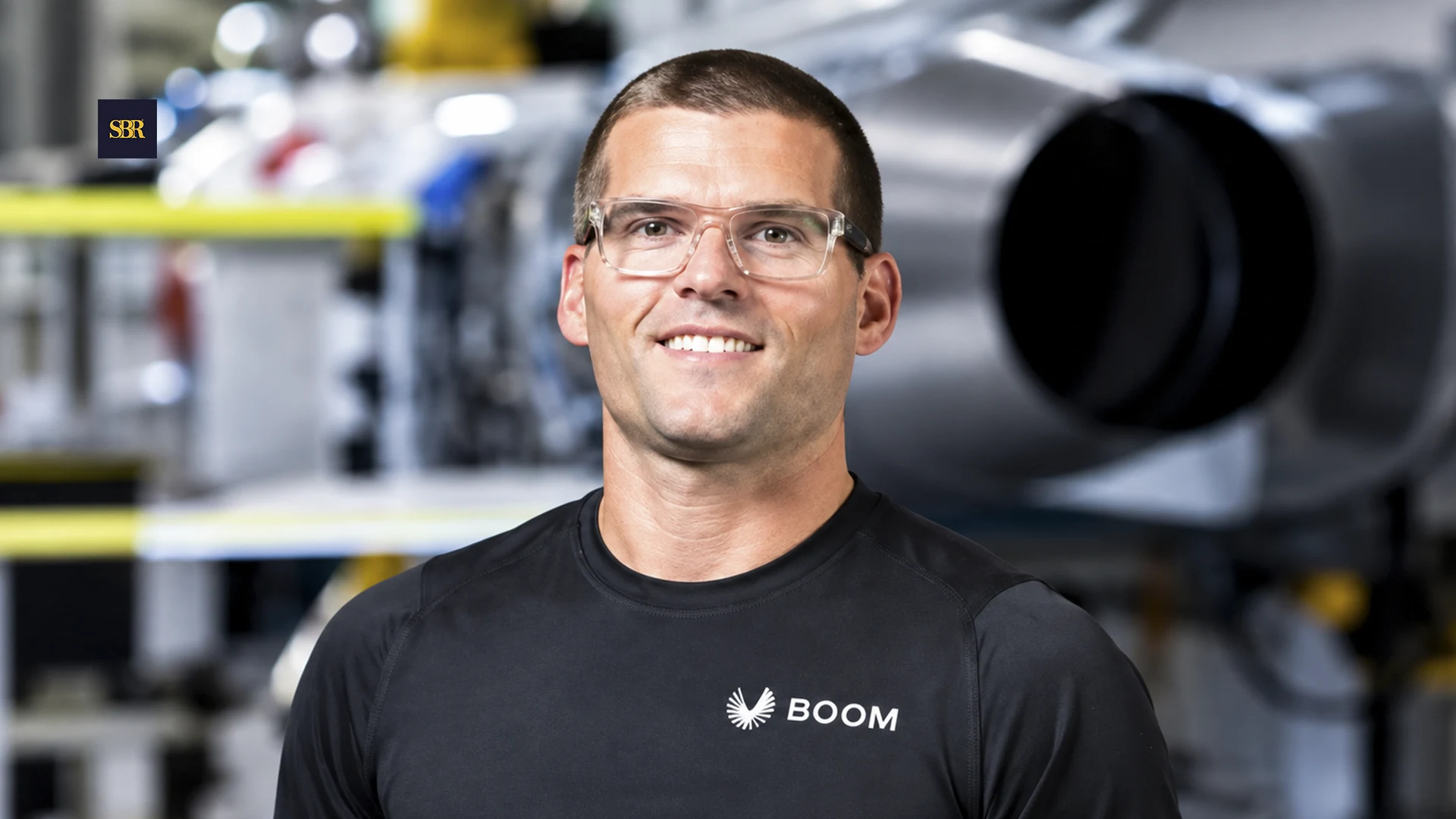
Austin Hickman, Ph.D., co-founder, is the CEO of Soctera, a semiconductor startup developing radio-frequency power amplifiers for radar, electronic warfare, satellite communications, and telecommunications. He co-founded the company while pursuing his doctorate in electrical and computer engineering at Cornell University, where his research focused on nitride semiconductor technology. Hickman holds a bachelor’s degree in electrical engineering from the University of Notre Dame and a Ph.D. from Cornell. He is an inventor on Soctera’s technology patents, has co-authored more than 20 peer-reviewed journal articles, and was named a 2022 Activate Anywhere Fellow.









.webp)